• WebStore |
  • Advanced Search |
  • MySARE Login |
  • SARE Social Media |
  • Contact Us |
  • SANET Listserv |
  • Low Bandwidth |
Search MySARE Reports
  • Grants
    • Apply for a Grant
    • Funded Grants in Your State
  • Project Reports
    • Submit a Report
    • Search the Database
    • Project Search Tips
    • About Project Reports
    • About Search Results
    • Project Products
  • Learning Center
    • Books
    • Bulletins
    • Fact Sheets
    • Topic Rooms
    • From the Field
    • Newsletters
    • Multimedia
    • Courses and Curricula
    • Project Products
    • SARE Biennial Reports
    • SANET Listserv
    • SARE Program Materials
    • Conference Materials
    • WebStore
  • Professional Development
    • PDP Overview
    • Fellows & Search for Excellence Programs
    • Sample PDP Grant Projects
    • Educator Curriculum Guides
    • National Continuing Education Program
    • State Coordinator Contact Information
  • State Programs
    • State Coordinator Program Overview
    • State Coordinator Contact Information
    • Funded Grants in Your State
  • Events
    • Event Calendar
    • Past Conferences
  • Newsroom
    • Press Releases
    • SARE in the News
    • Media Contacts
    • Newsletters
    • Media Toolkit
    • A Guide To This Site
    • SARE and Social Media
  • About SARE
    • SARE's Four Regions
    • SARE Grants
    • Learning Center
    • Professional Development
    • SARE Outreach
    • Historical Timeline
    • Staff
    • Vision & Mission
    • Join Our Mailing List
    • What is Sustainable Agriculture?
  • Home»
  • Learning Center»
  • Fact Sheets»
  • In-House Composting in High-Rise, Caged Layer Facilities»
  • Text Version»
  • Managing Compost Inside Poultry Facilities»
  • Managing Compost Inside Poultry Facilities, Page 2
facebook
Twitter
YouTube
- + Font Size
Print
Share

Text Version

  • Overview of High-Rise, Caged Layer Facilities and In-House Composting
  • Managing Compost Inside Poultry Facilities
    • Managing Compost Inside Poultry Facilities, Page 2
    • Managing Compost Inside Poultry Facilities, Page 3
  • Economic Evaluation
  • Research Synopsis
  • References
  • Printable Version

Can't find something? Ask or send feedback.

SARE's mission is to advance—to the whole of American agriculture—innovations that improve profitability, stewardship and quality of life by investing in groundbreaking research and education. SARE's vision is...

Managing Compost Inside Poultry Facilities, Page 2

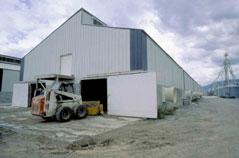
chicken house
Photo C. Research demonstrated the importance of turning frequency to maintain high compost temperatures.

Turning frequency
Research demonstrated the importance of turning frequency on maintaining compost temperatures above the lethal limit for fly larvae. Results showed that critical temperatures could be achieved by turning the material once every 2 to 3 days (Figure 2). Missed turning events resulted in a rapid drop in temperatures below the critical value (see insert graph in Figure 2). Regular monitoring of compost temperatures is critical to determine when to aerate the materials. An inexpensive compost thermometer should be purchased to monitor windrow temperatures. Temperature monitoring also can be used as a troubleshooting tool. If temperatures do not reach critical values for fly control after a turning event, check compost moisture content and C:N ratio and compare to desired ranges cited above or in handbook references [3].

Average compost temperatures increased over time as the total volume and insulating capacity of the material increased (Figure 2). However, frequent turning is still necessary to ensure that fresh material deposited on top of the windrows is rotated into the pile and heated to kill fly larvae. Flies develop from egg to adult stages in as little as nine days under ideal conditions. Therefore, ensuring that all manure is rotated into compost piles at least once every nine days is critical for successful fly control.

Composting manure from young poultry (pullets)
Composting manure from pullets was less successful in research. Compost failed to reach critical temperatures for fly control despite more frequent turning and supplemental carbon additions. The failure of composting with pullet manure was attributed to a higher moisture content compared to layer manure. Additional research on pullet manure composting is warranted. Increasing the rate of carbon may further promote successful pullet manure composting.

Moisture content
In the arid climate where this research was conducted, the moisture content of in-house compost declined to as low as 30% by weight during summer months [4, 5], well below the acceptable range of 40 to 65% [3]. Critical temperatures for fly control were still achieved with this low moisture content. Although studies in which water was added to composting materials were not conducted, supplemental water may increase composting temperatures in situations where the moisture content of material declines below critical levels.

Compost moisture content was higher in winter than in summer due to higher relative humidity, lower ambient temperatures and reduced operation of ventilation/cooling fans in the buildings during winter. More frequent turning and the addition of higher rates of carbon during winter are recommended to accelerate drying and promote higher material temperatures.


Page: 1 | 2 | 3

You are reading the SARE fact sheet In-House Composting in High-Rise, Caged Layer Facilities.

Order this publication.

25th SARE logo USDA Logo

1122 Patapsco Building | University of Maryland | College Park, MD 20742-6715

This Web site is maintained by the national outreach office of the SARE program, supported by the National Institute of Food and Agriculture, U.S. Department of Agriculture.

North Central SARE | Northeast SARE | Southern SARE | Western SARE

Sustainable Agriculture Research & Education ©2012

  • Help |
  • RSS Feeds |
  • A Guide To This Site