• WebStore |
  • Advanced Search |
  • MySARE Login |
  • SARE Social Media |
  • Contact Us |
  • SANET Listserv |
  • Low Bandwidth |
Search MySARE Reports
  • Grants
    • Apply for a Grant
    • Funded Grants in Your State
  • Project Reports
    • Submit a Report
    • Search the Database
    • Project Search Tips
    • About Project Reports
    • About Search Results
    • Project Products
  • Learning Center
    • Books
    • Bulletins
    • Fact Sheets
    • Topic Rooms
    • From the Field
    • Newsletters
    • Multimedia
    • Courses and Curricula
    • Project Products
    • SARE Biennial Reports
    • SANET Listserv
    • SARE Program Materials
    • Conference Materials
    • WebStore
  • Professional Development
    • PDP Overview
    • Fellows & Search for Excellence Programs
    • Sample PDP Grant Projects
    • Educator Curriculum Guides
    • National Continuing Education Program
    • State Coordinator Contact Information
  • State Programs
    • State Coordinator Program Overview
    • State Coordinator Contact Information
    • Funded Grants in Your State
  • Events
    • Event Calendar
    • Past Conferences
  • Newsroom
    • Press Releases
    • SARE in the News
    • Media Contacts
    • Newsletters
    • Media Toolkit
    • A Guide To This Site
    • SARE and Social Media
  • About SARE
    • SARE's Four Regions
    • SARE Grants
    • Learning Center
    • Professional Development
    • SARE Outreach
    • Historical Timeline
    • Staff
    • Vision & Mission
    • Join Our Mailing List
    • What is Sustainable Agriculture?
  • Home»
  • Learning Center»
  • Bulletins»
  • Smart Water Use on Your Farm or Ranch»
  • Text Version»
  • Soil Management»
  • Conservation Tillage
facebook
Twitter
YouTube
- + Font Size
Print
Share

Text Version

  • Soil Management
    • Compost
    • Conservation Tillage
    • Cover Crops
    • Profile: George Ayres, Shortsville, NY
  • Plant Management
  • Water Management
  • Resources
  • Printable Version

Can't find something? Ask or send feedback.

SARE's mission is to advance—to the whole of American agriculture—innovations that improve profitability, stewardship and quality of life by investing in groundbreaking research and education. SARE's vision is...

Conservation Tillage

Soil Management-Conservation Tillage

Randy Hines and wife Cheryl in corn field
Colorado crop farmer Randy Hines, shown with wife, Cheryl, designed a tillage tool that creates irrigation furrows every other row while retaining corn stalk residue, reducing water application.
Photo by Ron Daines

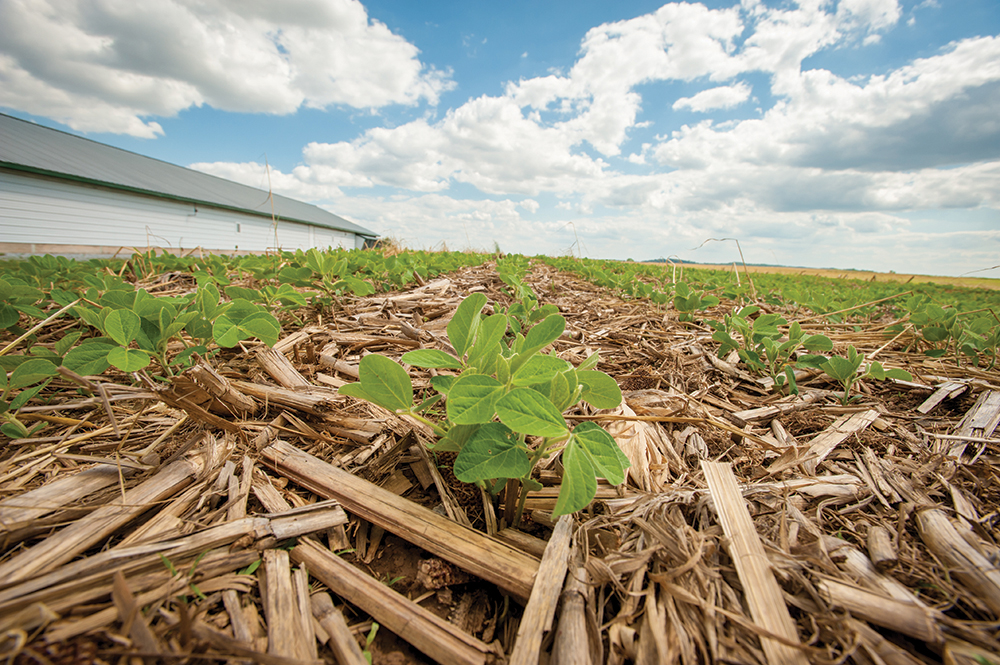
Conservation tillage leaves at least 30 percent of the soil surface covered by residue after planting. No-till planters leave much more than that by placing seeds or transplants in narrow slots, the only area where farmers disturb the soil. No-till consistently improves water infiltration, with reports of up to three times the infiltration of moldboard-plowed soil. Infiltration is likely to continue to increase the longer the soil is under no-till.

In Indiana, SARE-funded researchers at Purdue University tested cover crop mixes in corn and soybean operations. They found that cereal cover crops like wheat and rye increased soil aggregation and thus, water infiltration thanks to a more stable soil structure. Changing to no-till methods rather than plowing also had a great impact.

“Leaving the residue at the soil surface improves the soil,” said project leader Eileen Kladivko, because it minimizes raindrop impact and compaction, and increases earthworms that develop soil pores. “Either no-till or cover crops can be a benefit.”

Farmers in eastern Washington are adopting a no-till system co-developed by Diana Roberts of Washington State University (WSU) and grain farmer Karl Kupers. With a SARE grant, Roberts and Kupers devised a direct-seeding program where they drill alternative crops like hard red wheat directly into crops grown for seed, such as condiment mustard. The expanded rotation and no-till planting was a revolutionary shift from Kupers’ former wheat/fallow system.

Researchers building on Roberts’ study examined water use efficiency in the direct-seeding system and found that soil water storage and efficiency increased. “There was a trend for larger pore sizes under natural vegetation that would allow the soil to hold more water and provide increased soil aeration,” said lead researcher David Bezdicek of WSU.

In western Colorado, many farmers irrigate in furrows between crop rows plowed clean to facilitate water flow. Aided by a SARE farmer/rancher grant, Randy Hines, a crop farmer in Delta, Colo., wanted a better furrow irrigation strategy. Hines built a tillage tool that leaves vegetative residue on the soil, ripping the earth simultaneously to create irrigation furrows in every other 30-inch row.

Hines saved water by using half the typical number of irrigation furrows. He also protected the soil surface by retaining erosion-reducing corn stalk residue and reduced his tractor trips by half before planting corn, saving between $35 and $50 an acre. Corn yields remained similar to the previous year’s crop grown under conventional tillage.

Hines planted yellow beans in the field containing corn stalks using the same minimum tillage practices, comparing conventional plowing on an adjacent field. Hines noticed fewer weeds, used less water, and experienced no yield reduction in his bean harvest. In fact, in just two years, Hines boosted his soil’s organic matter.

Hines’ efforts have sparked interest among other area farmers, who have planted winter wheat in minimum-till corn, onions in hay, and other combinations. “Before our project, there was little minimum tillage done in our valley,” Hines said. After other farmers saw his results, every year “there are more acres not being plowed.”

Another no-till advocate, Steve Groff of Lancaster County, Pa., credits undisturbed soil combined with well-timed, year-round cover cropping, with improving soil quality and water infiltration. Groff, who grows a mix of market vegetables and grain crops, designed a no-till vegetable transplanter that allows him to plant seedlings directly into the thick residue of winter-grown cover crops. His annual vegetative residue has built organic matter and makes a noticeable difference when there’s too much or not enough rainfall.

“My crops seem to show drought stress a few days later then those around me,” Groff says. During the typical hot, droughty months of summer, his plants have an added vigor. “That’s when a good no-till system really shines,” he says.

With his video camera, Groff has documented his farm’s ability to absorb heavy rainfall in dramatic contrast to the steady streams of water pouring off his neighbors’ farms. Lancaster County runoff winds up in the Chesapeake Bay.

Compost | Cover Crops | N.Y. Farmer Profile

Top

You are reading the SARE bulletin Smart Water Use on Your Farm or Ranch.

Order this publication.

25th SARE logo USDA Logo

1122 Patapsco Building | University of Maryland | College Park, MD 20742-6715

This Web site is maintained by the national outreach office of the SARE program, supported by the National Institute of Food and Agriculture, U.S. Department of Agriculture.

North Central SARE | Northeast SARE | Southern SARE | Western SARE

Sustainable Agriculture Research & Education ©2012

  • Help |
  • RSS Feeds |
  • A Guide To This Site