• WebStore |
  • Advanced Search |
  • MySARE Login |
  • SARE Social Media |
  • Contact Us |
  • SANET Listserv |
  • Low Bandwidth |
Search MySARE Reports
  • Grants
    • Apply for a Grant
    • Funded Grants in Your State
  • Project Reports
    • Submit a Report
    • Search the Database
    • Project Search Tips
    • About Project Reports
    • About Search Results
    • Project Products
  • Learning Center
    • Books
    • Bulletins
    • Fact Sheets
    • Topic Rooms
    • From the Field
    • Newsletters
    • Multimedia
    • Courses and Curricula
    • Project Products
    • SARE Biennial Reports
    • SANET Listserv
    • SARE Program Materials
    • Conference Materials
    • WebStore
  • Professional Development
    • PDP Overview
    • Fellows & Search for Excellence Programs
    • Sample PDP Grant Projects
    • Educator Curriculum Guides
    • National Continuing Education Program
    • State Coordinator Contact Information
  • State Programs
    • State Coordinator Program Overview
    • State Coordinator Contact Information
    • State Program Webpages
    • Funded Grants in Your State
  • Events
    • Event Calendar
    • Past Conferences
  • Newsroom
    • Press Releases
    • SARE in the News
    • Media Contacts
    • Newsletters
    • Media Toolkit
    • A Guide To This Site
    • SARE and Social Media
  • About SARE
    • SARE's Four Regions
    • Join Our Mailing List
    • SARE Grants
    • Learning Center
    • Professional Development
    • SARE Outreach
    • Historical Timeline
    • Staff
    • Vision & Mission
    • What is Sustainable Agriculture?
  • Home»
  • Learning Center»
  • Bulletins»
  • Smart Water Use on Your Farm or Ranch»
  • Text Version»
  • Soil Management»
  • Compost
facebook
Twitter
YouTube
- + Font Size
Print
Share

Text Version

  • Soil Management
    • Compost
    • Conservation Tillage
    • Cover Crops
    • Profile: George Ayres, Shortsville, NY
  • Plant Management
  • Water Management
  • Resources
  • Printable Version

Can't find something? Ask or send feedback.

SARE's mission is to advance—to the whole of American agriculture—innovations that improve profitability, stewardship and quality of life by investing in groundbreaking research and education. SARE's vision is...

Compost

Soil Management-Compost

applying compost to research plots
Virginia Tech researchers study the effects of compost on experiment station vegetable plots to improve soil quality, including water-holding capacity and infiltration.
Photo by Greg Evanylo

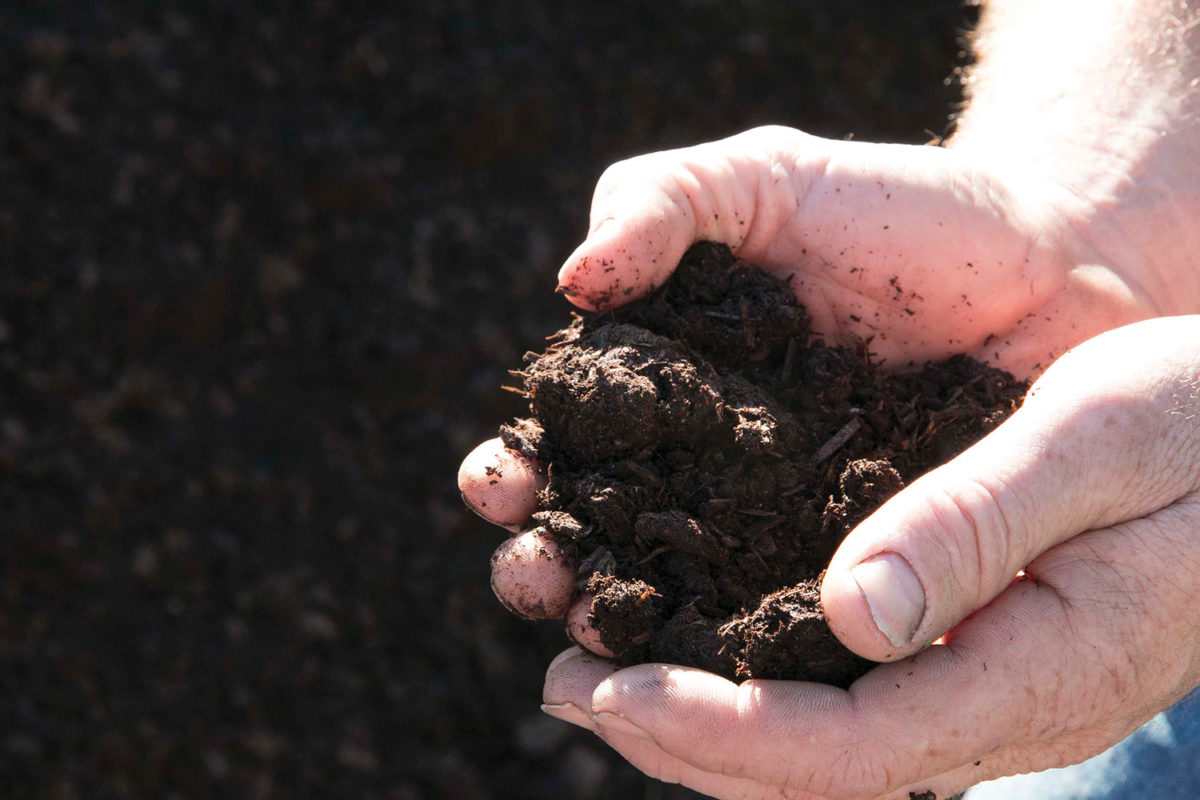
Some farmers, particularly organic producers, have long applied manure and compost to meet their fertility needs. However, most non-organic vegetable producers rely on the quicker fix of annual applications of commercial fertilizer. SARE-funded researchers in Virginia tested compost on non-organic vegetable farms to demonstrate its ability to enhance soil quality, including water-holding capacity, bulk density, infiltration, organic matter and plant-available nutrients.

“Water stress is the most critical environmental factor limiting crop production in the southeastern United States,” said Greg Evanylo, professor of crops and soil environmental sciences at Virginia Tech. “After a few drought years, farmers tend to better understand the importance of soil quality.”

Evanylo determined that applying compost (made from three parts yard waste to one part poultry litter) at rates designed to meet vegetable nitrogen needs reduced soil bulk density and compaction, and increased water infiltration.

Compost is relatively expensive. Yet, rising commercial fertilizer costs and nutrient management regulations that prevent confined livestock operators from land-spreading manure on high-phosphorus soils might prompt more producers to begin composting, Evanylo said.

On a previous study, Evanylo found that compost applications at high rates improved yields and water-holding capacity in sandy soils. “When you add cover crops or lots of organic matter, it maintains the structure at the soil surface, preventing the beating-down effect of raindrops that break up the soil,” he said. “It allows water to infiltrate and increases storage.”

You don’t have to use compost, however. Consider applying uncomposted organic material directly to the soil and also using cover crops. Bob Muth, who grows vegetables and hay on 52 acres in Williamstown, N.J., augments his soil organic matter by using cover crops and spreading the leaves collected by local municipalities on some of his fields each autumn. Over the years, he has vastly improved the soil’s infiltration, a must on his gravelly sandy loam that includes 15 percent clay and a tendency to crust.

Typically, Muth covers the ground with up to six inches of leaves, or 20 tons per acre. The following spring, he works in the decomposing leaves. He also plants a variety of cover crops, including sudangrass, a quick-growing high-mass summer cover that breaks up compacted soil. His fields test as high as 5 percent organic matter, unheard of for the mineral soils of southern New Jersey.

Caution: Apply Phosphorus With Care

Managing soil phosphorus is a growing concern for both farmers and environmental regulators because over-applying P in composted or uncomposted animal waste may contribute to surface water pollution. Although phosphorus is an essential element for plant nutrition, excessive amounts can wash or leach into waterways.

Experts suggest analyzing the phosphorus and nitrogen contents of compost and considering it as part of your nutrient management planning. Routine testing is both recommended and widely available. Test your soil – as well as your organic amendments such as compost – for nitrogen and phosphorus levels, and test your compost for moisture content. Find your state’s soil testing lab, typically at your Land Grant University, and ask whether they also have a P index, a newly developed tool to measure phosphorus concentration.

Conservation Tillage | Cover Crops | N.Y. Farmer Profile

Top

You are reading the SARE bulletin Smart Water Use on Your Farm or Ranch.

Order this publication.

Sare 25 Years

1122 Patapsco Building | University of Maryland | College Park, MD 20742-6715

This Web site is maintained by the national outreach office of the SARE program, supported by the National Institute of Food and Agriculture, U.S. Department of Agriculture.

North Central SARE | Northeast SARE | Southern SARE |  Western SARE

Sustainable Agriculture Research & Education ©2012

  • Help |
  • RSS Feeds |
  • A Guide To This Site