• WebStore |
  • Advanced Search |
  • MySARE Login |
  • SARE Social Media |
  • Contact Us |
  • SANET Listserv |
  • Low Bandwidth |
Search MySARE Reports
  • Grants
    • Apply for a Grant
    • Funded Grants in Your State
  • Project Reports
    • Submit a Report
    • Search the Database
    • Project Search Tips
    • About Project Reports
    • About Search Results
    • Project Products
  • Learning Center
    • Books
    • Bulletins
    • Fact Sheets
    • Topic Rooms
    • From the Field
    • Newsletters
    • Multimedia
    • Courses and Curricula
    • Project Products
    • SARE Biennial Reports
    • SANET Listserv
    • SARE Program Materials
    • Conference Materials
    • WebStore
  • Professional Development
    • PDP Overview
    • Fellows & Search for Excellence Programs
    • Sample PDP Grant Projects
    • Educator Curriculum Guides
    • National Continuing Education Program
    • State Coordinator Contact Information
  • State Programs
    • State Coordinator Program Overview
    • State Coordinator Contact Information
    • State Program Webpages
    • Funded Grants in Your State
  • Events
    • Event Calendar
    • Past Conferences
  • Newsroom
    • Press Releases
    • SARE in the News
    • Media Contacts
    • Newsletters
    • Media Toolkit
    • A Guide To This Site
    • SARE and Social Media
  • About SARE
    • SARE's Four Regions
    • Join Our Mailing List
    • SARE Grants
    • Learning Center
    • Professional Development
    • SARE Outreach
    • Historical Timeline
    • Staff
    • Vision & Mission
    • What is Sustainable Agriculture?
  • Home»
  • Learning Center»
  • Books»
  • Manage Insects on Your Farm»
  • Text Version»
  • Putting it All Together»
  • Enhancing Biota and Improving Soil Health
facebook
Twitter
YouTube
- + Font Size
Print
Share

Text Version

  • Acknowledgments
  • Introduction
  • Table of Contents
  • How Ecologically Based Pest Management Works
  • Principles of Ecologically Based Pest Management
  • Identification Key to Major Beneficials and Pests
  • Managing Soils to Minimize Crop Pests
  • Farm Feature: Triple Threat to Pests: Cover Crops, No-Till, Rotation
  • Beneficial Agents on the Farm
  • Putting it All Together
    • Designing a Habitat Management Strategy
    • Fine-Tuning Farm Management to Enhance Specific Beneficials
    • Enhancing Biota and Improving Soil Health
    • Strategies for Enhancing Plant Diversity
    • Rolling Out Your Strategy
    • Figure 2: Preventative and Reactive Strategies That Enhance Ecological Pest Management
    • Key Elements of Ecological Pest Management
    • Farm Feature: Rotation, Rotation, Rotation: Alfalfa, Cover Crops Break Pest Cycles
    • Universal Principles, Farm-Specific Strategies
    • Guidelines for Designing Healthy and Pest-Resiliant Farming Systems
    • 10 Indicators of Soil Quality
    • 10 Indicators of Crop Health
  • Resources: General Information
  • Printable Version

Can't find something? Ask or send feedback.

SARE's mission is to advance—to the whole of American agriculture—innovations that improve profitability, stewardship and quality of life by investing in groundbreaking research and education. SARE's vision is...

Enhancing Biota and Improving Soil Health

Enhancing Biota and Improving Soil Health

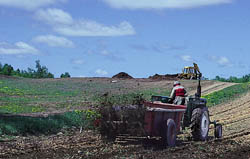
field compost application
Compost, judiciously applied, can replace mineral fertilizers and feed beneficial soil organisms. Photo by Greg Porter, Univ. of Maine
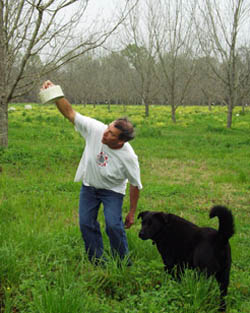
checking wasp populations
Frank Bibin of Quitman, Ga., checks a house he built in his pecan orchard to attract predatory wasps. Photo by Preston Roland

Managing soil for improved health demands a long-term commitment to using combinations of soil-enhancing practices. The strategies listed below can aid you in inhibiting pests, stimulating natural enemies and — by alleviating plant stress — fortifying crops’ abilities to resist or compete with pests.

Add plentiful amounts of organic materials from cover crops and other crop residues as well as from off-field sources like animal manures and composts. Because different organic materials have different effects on a soil’s biological, physical and chemical properties, be sure to use a variety of sources. For example, well-decomposed compost may suppress crop diseases, but it does not enhance soil aggregation in the short run. Dairy cow manure, on the other hand, rapidly stimulates soil aggregation.
Keep soils covered with living vegetation and/or crop residue. Residue protects soils from moisture and temperature extremes. For example, residue allows earthworms to adjust gradually to decreasing temperatures, reducing their mortality. By enhancing rainfall infiltration, residue also provides more water for crops.

Reduce tillage intensity. Excessive tillage destroys the food sources and microniches on which beneficial soil organisms depend. When you reduce your tillage and leave more residues on the soil surface, you create a more stable environment, slow the turnover of nutrients and encourage more diverse communities of decomposers.

Adopt other practices that reduce erosion, such as strip cropping along contours. Erosion damages soil health by removing topsoil that is rich in organic matter.

Alleviate the severity of compaction. Staying off soils that are too wet, distributing loads more uniformly and using controlled traffic lanes — including raised beds — all help reduce compaction.

Use best management practices to supply nutrients to plants without polluting water. Make routine use of soil and plant tissue tests to determine the need for nutrient applications. Avoid applying large doses of available nutrients — especially nitrogen — before planting. To the greatest extent possible, rely on soil organic matter and organic amendments to supply nitrogen. If you must use synthetic nitrogen fertilizer, add it in smaller quantities several times during the season. Once soil tests are in the optimal range, try to balance the amount of nutrients supplied with the amount used by the crops.

Leave areas of the farm untouched as habitat for plant and animal diversity.

Individual soil-improving practices have multiple effects on the agro-ecosystem. When you use cover crops intensively, you supply nitrogen to the following crop, soak up leftover soil nitrates, increase soil organisms and improve crop health. You reduce runoff, erosion, soil compaction and plant-parasitic nematodes. You also suppress weeds, deter diseases and inoculate future crops with beneficial mycorrhizae. Flowering cover crops also harbor beneficial insects.

CAUTION: When designing fields to manage specific pests, other pests can reach damaging levels. For example, spacing crops closely can prompt disease outbreaks.


Previous Section | Top | Next Section

You are reading the SARE book Manage Insects on Your Farm.

Order this publication.

Sare 25 Years

1122 Patapsco Building | University of Maryland | College Park, MD 20742-6715

This Web site is maintained by the national outreach office of the SARE program, supported by the National Institute of Food and Agriculture, U.S. Department of Agriculture.

North Central SARE | Northeast SARE | Southern SARE |  Western SARE

Sustainable Agriculture Research & Education ©2012

  • Help |
  • RSS Feeds |
  • A Guide To This Site