Showing 1-10 of 24 results

Enterprise Budgets for Diversified Farms
SARE’s newest bulletin, Enterprise Budgets for Diversified Farms: Tools for Understanding Your Bottom Line provides guidance on using enterprise budgets, recordkeeping systems and partial budget analysis to evaluate management decisions for diversified farm operations.

2025–2026 Report from the Field
In Recognition of Farmers and Ranchers SARE has been around for nearly 40 years, and the impacts that our grant and outreach programs have had on the sustainability of U.S. agriculture are because of one simple thing: Farmers and ranchers are at the center of everything we do. SARE is afunding sourcefor producers.It’s designed forproducers, […]

New Video: Find Success Through Mentorship
After his father’s death, Warren Miller returned to the Palouse region of Washington state to assume the role of fifth generation steward of the family’s 1,200 acre wheat, barley and canola farm. “My biggest challenge was I didn’t really have a mentor or someone I could go to and hit with questions,” Miller says.
Producer Partnerships Demonstrate the Benefits of Integrated Systems: Increased Profits and Soil Health
In the semiarid climate of the Great Plains, persistent drought is increasingly contributing to crop failure and soil erosion. A recent North Central SARE Research and Education grant in Kansas demonstrated how integrating crops, livestock and cover crops could help some producers offset revenue loss and failing crops. Kansas State University’s Dr. Augustine Obour partnered […]
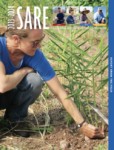
2023–2024 Report from the Field
SARE grants havehelped our viabilityas a business anddemonstrated thatsmall businessescan make a positiveimpact on theenvironment when wedevelop relationshipswith each other forthe benefit of all. Jeanine SeabrookGlass Rooster Cannery Letter from the Director I have always appreciated the value of long-term research as well as the long-term impact of both applied and basic research. The core […]
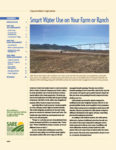
Smart Water Use on Your Farm or Ranch
As producers throughout the nation grow increasingly concerned about water scarcity, farmers, ranchers and agricultural educators are beginning to explore new, conservation-oriented approaches to water use.
SARE Fellows Tour Sustainability in North Carolina
SARE Fellows Tour Sustainability in North Carolina RALEIGH, North Carolina – Organic sweet potatoes are in high demand in North Carolina, but growers face two major hurdles: weeds and wireworms. North Carolina State University researchers think cover crops might be a solution, and that would make third generation farmer Kelvin Bass a happy man. “I’m tremendously […]
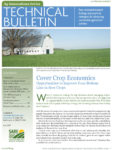
Cover Crop Economics Report Now Available in Print
Cover Crops Offer Options in Wet Soil As more farmers across the nation begin to incorporate covers into their rotations, they find that this valuable conservation practice pays in more ways than one. Many farmers in states suffering from oversaturated fields that prevented or delayed planting are considering cover crops. To help farmers evaluate the […]
When Do Cover Crops Pay? New USDA-SARE Report Addresses the Question
Farmers around the country are planting cover crops on millions of acres to protect and improve the soil, and the more that farmers use cover crops, the more they value this conservation practice. Cover Crop Economics, a new report published by USDA-SARE looks at the economics of cover crops to help farmers answer that big […]
Cover Crop Economics
Cover crops can build soil health, control weeds, conserve moisture, provide grazing opportunities and more. But when do they start to pay for themselves? This analysis looks at the economics behind different management scenarios to determine if cover crops are likely to improve profitability in one, three or five years of use in corn and soybean rotations.