Showing 11-20 of 36 results
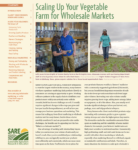
Scaling Up Your Vegetable Farm for Wholesale Markets
SARE’s newest bulletin, Scaling Up Your Vegetable Farm for Wholesale Markets, provides a variety of strategies and tools to help owners of small- to mid-scale operations branch out into wholesale markets.
Scaling Up Your Vegetable Farm for Wholesale Markets
For direct market farmers, expanding your operation to capture local and regional wholesale markets can represent an opportunity. But such a shift brings with it many changes to how you run your farm because the expectations that wholesale buyers have is much different than your direct market customers. Scaling Up Your Vegetable Farm for Wholesale […]
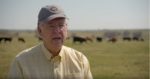
Bringing Independent Farmers into the Marketplace
Small- and mid-sized farms are increasingly turning to supermarkets as a means to earn more for their products and to participate in local economies. In this video, Diana Endicott discusses how she decided to take this route 15 years ago when it was less typical, and how her efforts have resulted in a 100-member co-op today that sells to 30 stores in the Kansas City area.

Building a Local Food Movement
Over the last few decades, agriculture in western North Carolina has transformed from a reliance on tobacco to a diversified, self-sustaining industry intertwined with local communities and economies. In this video, learn how one organization has worked alongside local farmers and communities to support this transformation.
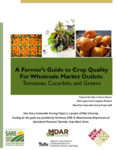
A Farmer's Guide to Crop Quality for Wholesale Outlets
A simple guide to crop quality focused on tomatoes, cucurbits and greens, with photos of good and poor crop quality as well as best practices for post-harvest handling.
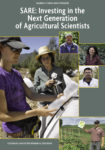
Investing in the Next Generation of Agricultural Scientists
Sustainable solutions to today's agricultural challenges arise when scientists, educators and producers work together to test theories in real-world, on-farm situations. For this approach itself to be sustainable, there must be opportunities for the next generation of agricultural scientists to use collaborative, applied research to address the real-world needs of farmers and ranchers. The SARE Graduate Student grant program is one such opportunity—since 2000, the program has supported the work of 600 master's and Ph.D. students.
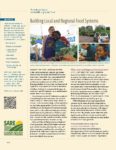
Farm to Table: Building Local and Regional Food Systems
More and more, farmers, ranchers, ag professionals, community organizers and others are striving to reconfigure the nation's food system so more value stays in food-producing communities.
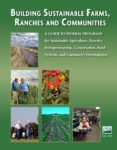
Building Sustainable Farms, Ranches and Communities
This guide lists funding opportunities offered by federal programs, and is indispensable for anyone seeking government help to foster their innovative enterprise in forestry and agriculture.
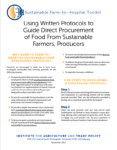
Farm to Hospital Toolkit
Tools farmers and hospitals can use to increase direct hospital purchases from local producers.

Edible Avalon Curriculum
This summer program curriculum teaches youth about local food systems and sustainable agriculture.