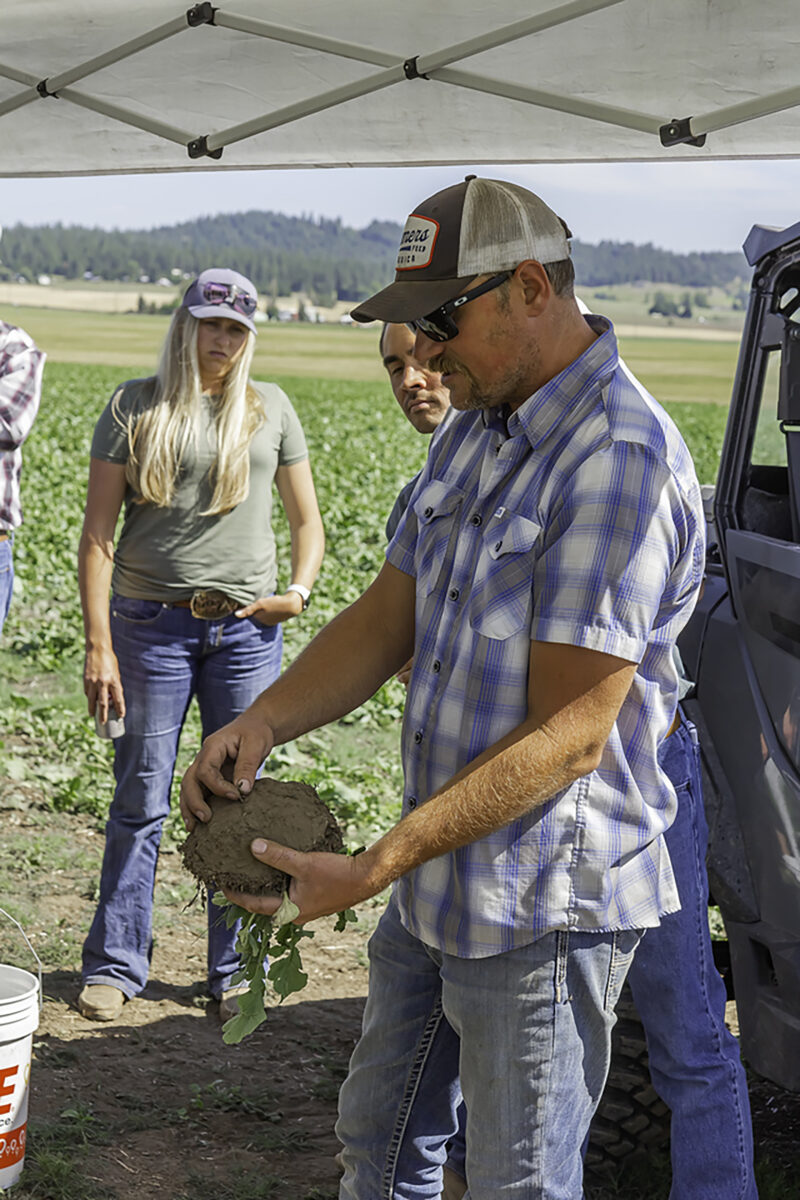
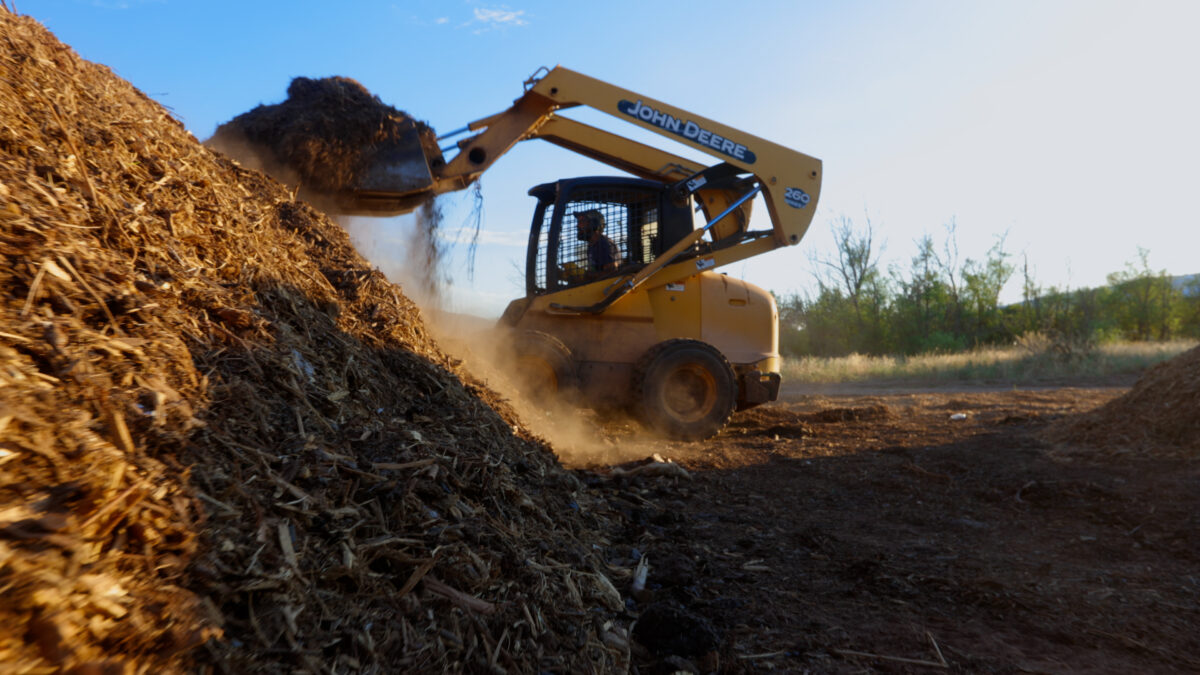
Second photo from left by LD Productions; all others by Vo von Sehlen, Vo-tography Images
Recent Highlights from the Western Region
- Grantees in our region reported the following impacts from projects funded in 2022–2023: 683 producers actively participated in research; 7,825 producers were reached; 2,928 producers reported gaining knowledge, attitude, skills or awareness; 635 producers changed a practice; and 835 on-farm demonstrations, workshops and field days were held.
- We hosted two annual Cultivating Agricultural Partnerships for Sustainability (CAPS) Summits, one in Salt Lake City and one in Phoenix. This interactive and informational summit centered on bringing together individuals, groups, and entities actively working in the field of sustainable agriculture. Summit objectives were to foster opportunities for participants to share program information, develop relationships, and network among nonprofits, state Extension and Western SARE. At each one, over 130 participants developed a better understanding of how to work together to address the most critical issues facing sustainable agriculture. Mike Peterson of This Week in Agribusiness was a keynote speaker and moderator at both events.
- Our podcast Fresh Growth: Approaches to a More Sustainable Future from Western Ag is starting its sixth season, and has more than 7,700 downloads. All guests are farmers and ranchers who are finding innovative, sustainable practices that enrich our natural resources and pay off economically. We also created a series of videos highlighting successful Farmer/Rancher grantees, which have been viewed more than 17,000 time
Total Grant Awards 1988-20251
1,753 GRANTS
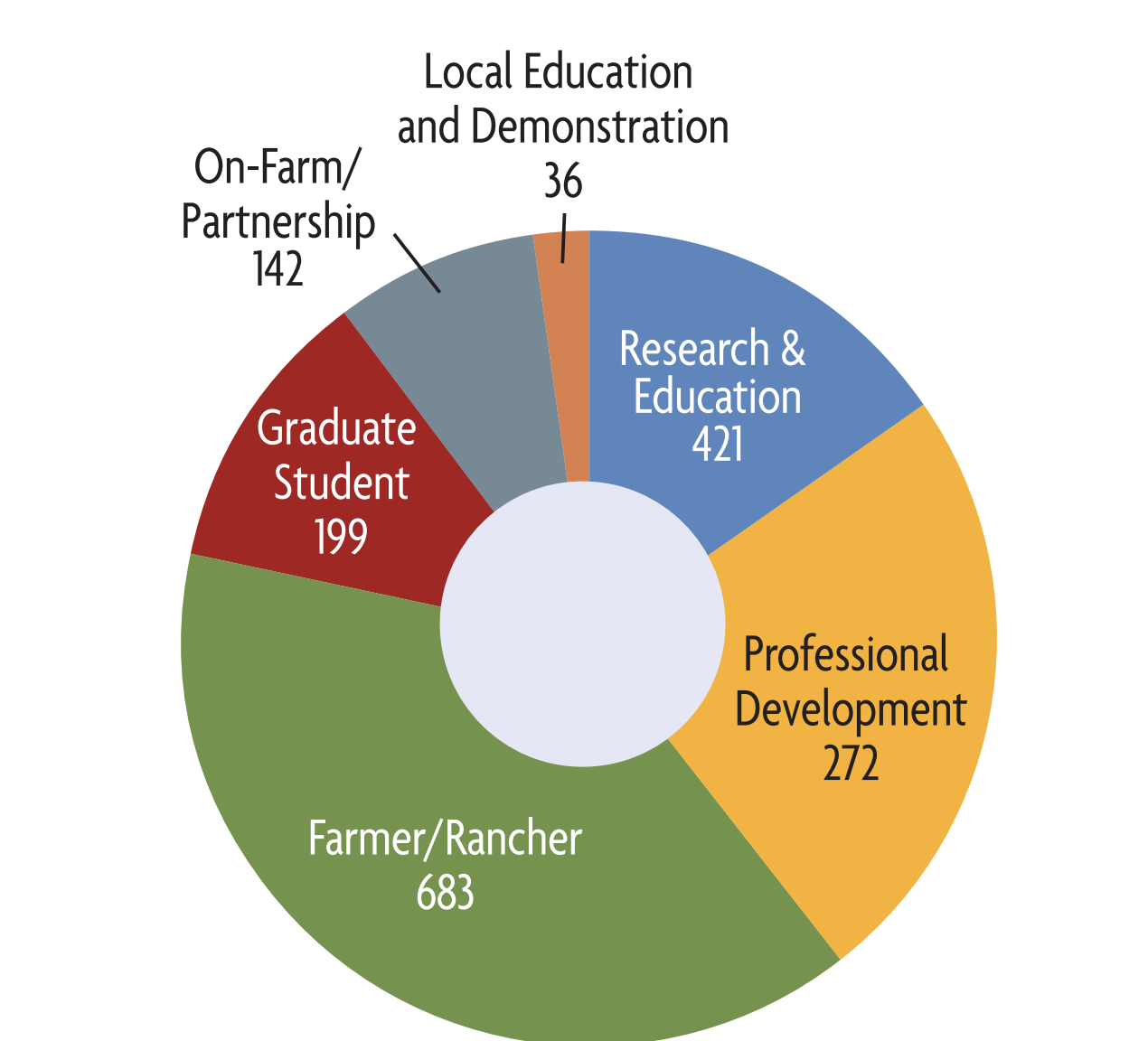
$110 MILLION
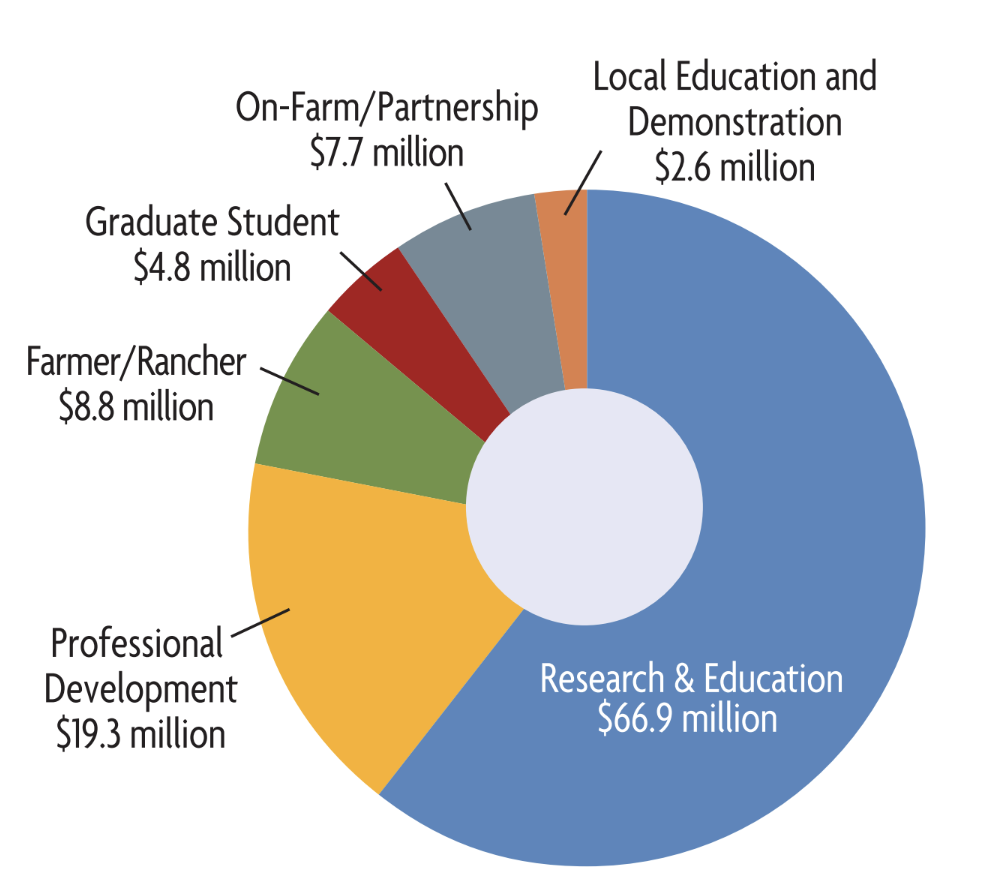
Grant Proposals and Awards 2024-2025
| Grant type | Preproposals Received2 | Full Proposals Invited | Full Proposals Received | Proposals Funded | Funding Total |
| Research and Education | 140 | 112 | 104 | 25 | $7,935,599 |
| Professional Development Program | N/A | N/A | 69 | 31 | $3,055,863 |
| Farmer/Rancher | N/A | N/A | 101 | 45 | $1,106,492 |
| On-Farm Research/Partnership | N/A | N/A | 66 | 21 | $1,579,225 |
| Graduate Student | N/A | N/A | 78 | 34 | $1,012,890 |
| Local Education and Demonstration | N/A | N/A | 34 | 8 | $493,238 |
1 These totals exclude additional direct funding given each year to Cooperative Extension in every state to support state-level programming on sustainable agriculture.
2 The use of a preproposal process varies by region. It serves to screen project ideas for the larger and more complex grant programs, and to reduce applicants’ proposal preparation burden as well as the proposal review burden for SARE’s volunteer reviewers.
Ranchers Turn to Compost to Improve Soils and Boost Forage Production
We would not have been able to pull this off without the Western SARE grant.
Zachary Withers, Polk’s Folly Farm
The Challenge
Historical mismanagement of rangelands in the semi-arid Southwest has put a huge financial squeeze on today’s ranchers. Degraded soils combined with increasingly erratic precipitation patterns–usually in the form of prolonged and intense drought–have made it difficult for ranchers to maintain consistent forage levels for their herds, which is the basis of their livelihoods. As a result, many ranchers in the region are adopting new practices aimed at improving the health of their soils and the quality of the forage resources available to them. Healthier soils can capture and store more rainfall and snowmelt, and they resist erosion better during extreme rains. They can also support a greater diversity of forage species and higher, more consistent levels of forage production.
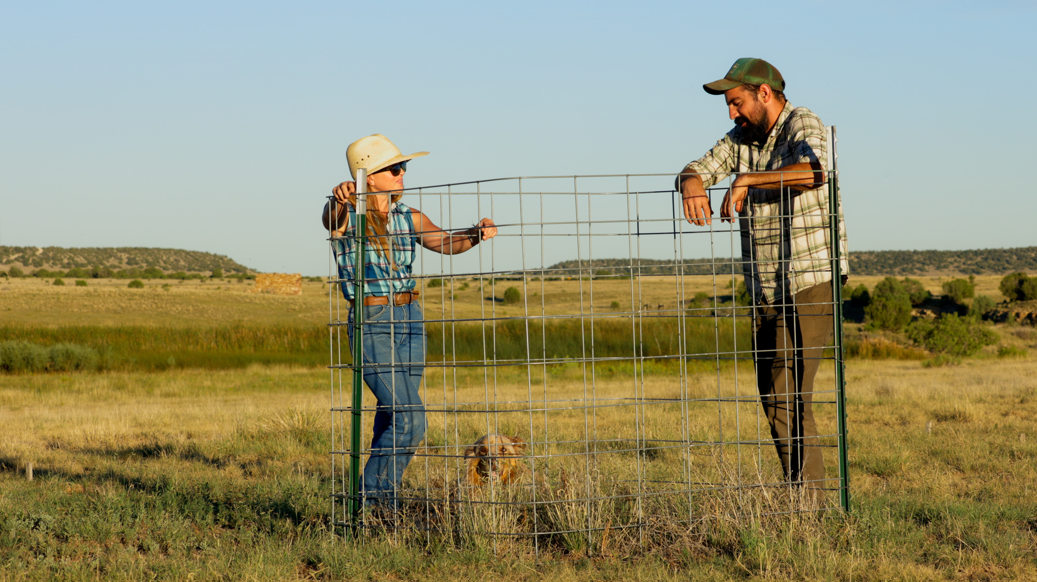
Photo by LD Productions
The Actions Taken
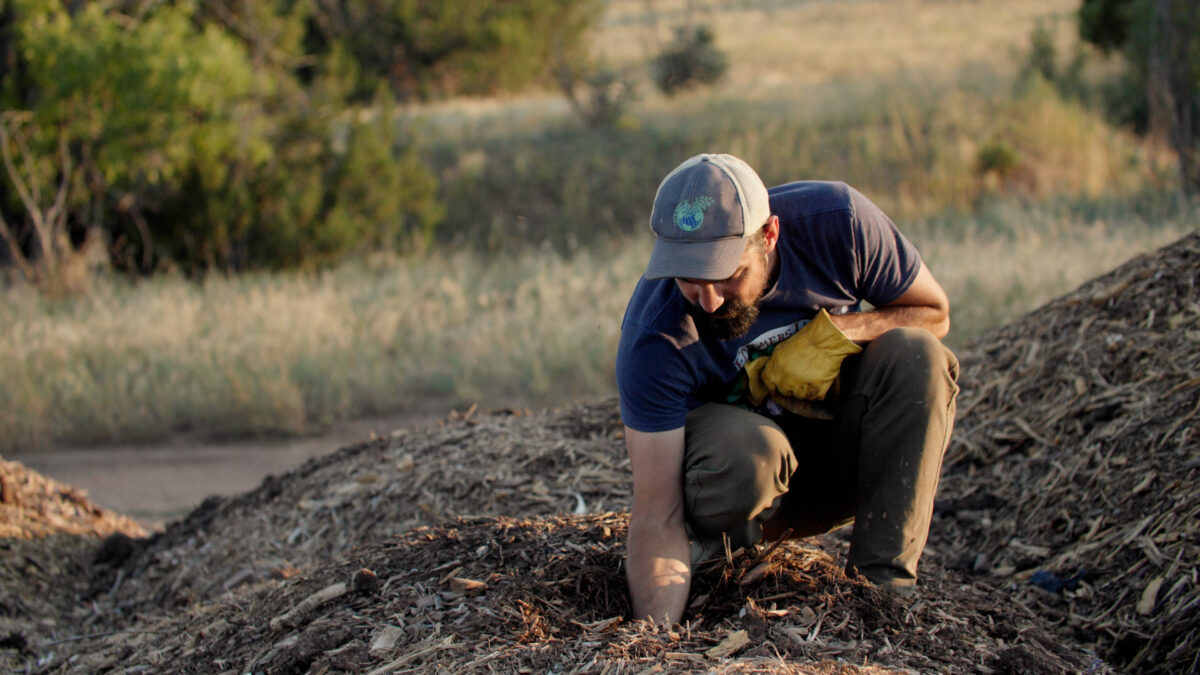
Zachary Withers, who co-owns Polk’s Folly Farm with his brother in Cedar Crest, N.M., used a SARE Farmer/Rancher grant to see what effect compost would have on their soils and forage resources. Working closely with fellow rancher Emily Cornell of Sol Ranch and a team of technical advisors, he designed a research project to compare the effect of different compost application rates on test plots over the course of two years. The compost they used was a readily available resource–Withers makes it on his own farm, primarily from food scraps and wood mulch, with additional feedstocks including horse, pig and chicken manure. During the project, the group collected and analyzed a wide range of data on key indicators on soil health and forage quality.
The Impacts
"I think the most consistent and positive results we got were in water infiltration,” Withers says. “The ability of the soil to absorb water dramatically increased." Cornell agrees, and adds that she saw a noticeable improvement in the density and diversity of plants in the test plots from compost applications. Other specific impacts include:
- The group generally found a linear relationship between compost applications and improved indicators; in other words, the more compost added, the more the soil improved. This knowledge can help producers make decisions about application rates based on their own constraints and goals.
- During the project, Cornell and Withers each hosted a field day at their respective ranches, involving a total of 32 local ranchers and service providers.
Learn more: See the related SARE project FW20-363
Bringing High-Yielding, Low-Cost Mango Orchard Systems to Hawaii
The Challenge
Over time, Hawaii’s once-vibrant agricultural industry has given way to an economy dominated by tourism, but many Hawaiians are now interested in bringing agriculture back to the forefront as a way to improve their state’s resilience. Umi Martin is one of these people, by scaling up mango production. When starting out, the problem for Martin was that the conventional production method in other tropical regions doesn’t translate well to Hawaii. This is because trees in conventional systems are planted at 25 feet by 25 feet and they grow very large, making them difficult to maintain and harvest. So, to be successful, a producer would need a lot of land and labor, plus capital and expensive equipment. And these are things that most of Hawaii’s farmers don’t have easy access to.
By improving our orchard systems through high density orchards, we are going to be able to grow our industry.
Umi Martin, Umi’s Farm
The Actions Taken
To overcome these challenges, Martin used two SARE Farmer/Rancher grants–one in 2017 and another in 2021–to demonstrate that mangoes can be grown in innovative systems that are high yielding but don’t require intensive labor or a large landbase. He focused on two orchard systems that have been developed in recent decades in such places as India and Australia: the Tatura trellis system and the ultra high density plantation (UHDP) system. In both systems, the key concepts are that instead of planting 50 large trees per acre, you plant 300 or more, and keep them pruned to a height of about 6 feet. This dramatically reduces labor because a person can prune and harvest trees quickly, from the ground. With his first grant, Martin established orchards using each system, his main goal being to track the labor and startup costs. With his second project, after the trees matured, he focused on evaluating yield and profitability, while also identifying management and postharvest issues to work out.
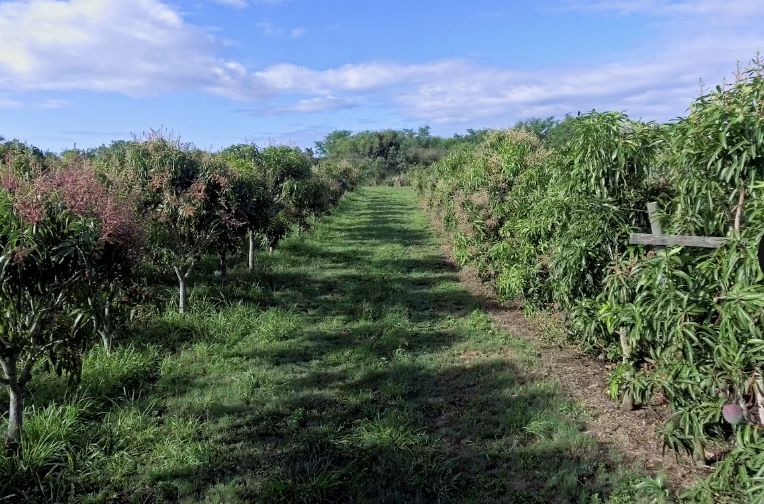
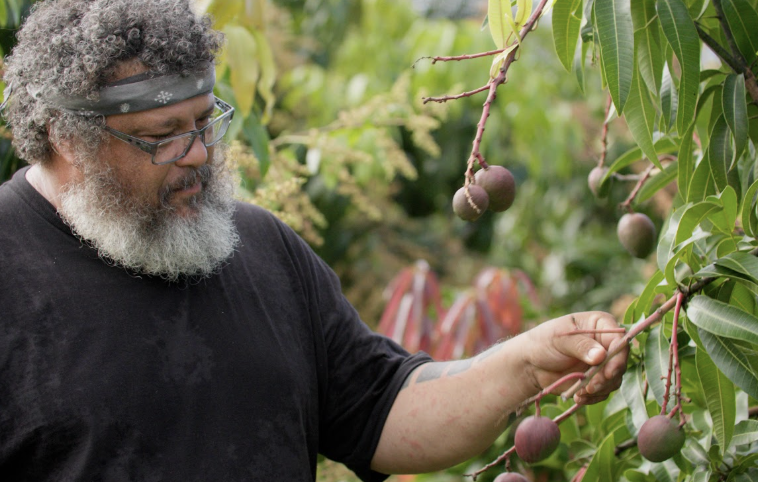
Umi Martin is attempting to bring high-yielding, small-scale mango production to the Hawaiian islands. Photos by LD Productions
The Impacts
Martin learned a great deal from these projects to inform how he plans to improve his systems, as he also continues to demonstrate their effectiveness to other farmers. Specific impacts include:
- Martin’s main advice is to slightly lower the planting density and widen the rows, to both improve airflow and sunlight, and to allow for small tractors to pass through.
- He discovered that when bringing mango branches so low to the ground, feral pigs become a major pest, requiring the need for electric fencing.
- One year, Martin achieved an 8,000 pound yield of the Keitt mango variety on 0.3 acre. This translates to 12 tons per acre, or a 140–500% improvement over conventional yields.
Learn more: See the related SARE projects FW17-034 and FW21-375.
Gaining New Insights into Alley Cropping to Share with Farmers in Western Washington
The Challenge
Alley cropping is the practice of growing annual crops between rows of fruit trees or other perennials. Interest in alley cropping is growing because it has great potential to improve both soil health and water management, while also maintaining or improving farm productivity. But good information isn’t always available on which systems work best in a specific region, or what benefits one can expect to see, in terms of the impact on soil health, water management, biological diversity, quantity and quality of yields, and profitability. This was the problem faced by Nichlos Pate, owner of Raising Cane Ranch in Snohomish, Wa., when he started thinking about integrating two of his main crops–annual hay fields and apple orchards–into an integrated system.
SARE allowed me to take on that risk of an experiment, to do alley cropping.
Nichlos Pate, Raising Cane Ranch
The Actions Taken
Pate used a SARE Farmer/Rancher grant to study the ecological and economic impact of a hay/cider apple agroforestry system on his farm, with the intention also of sharing his experience with other farmers in his area. Collaborating with a team of local farm advisors, Pate tracked the costs associated with establishing the hay/orchard system as well as the ongoing costs to maintain it. He also tracked the system’s impact on annual hay yields and soil health measurements. He was able to compare yield and soil health data in the new field to data from both a hay/apple field he had established in 2017 and a control hay field. Another objective was to share the data they gathered with the local farming community through field events, publications and outreach online.
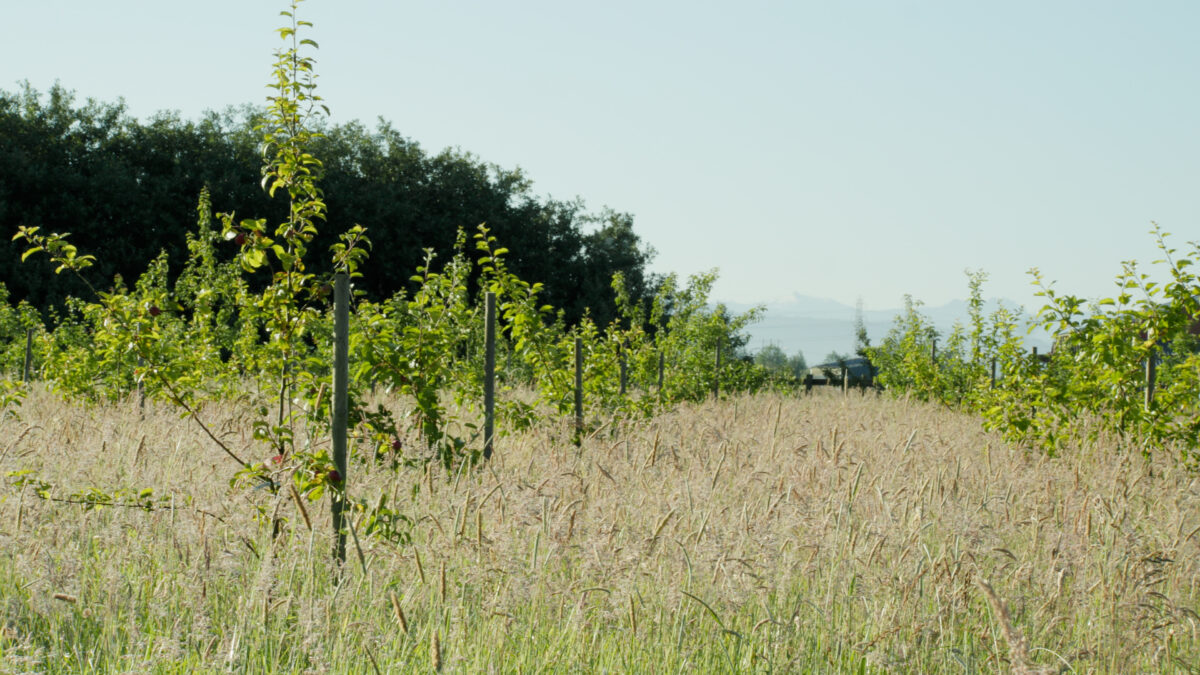
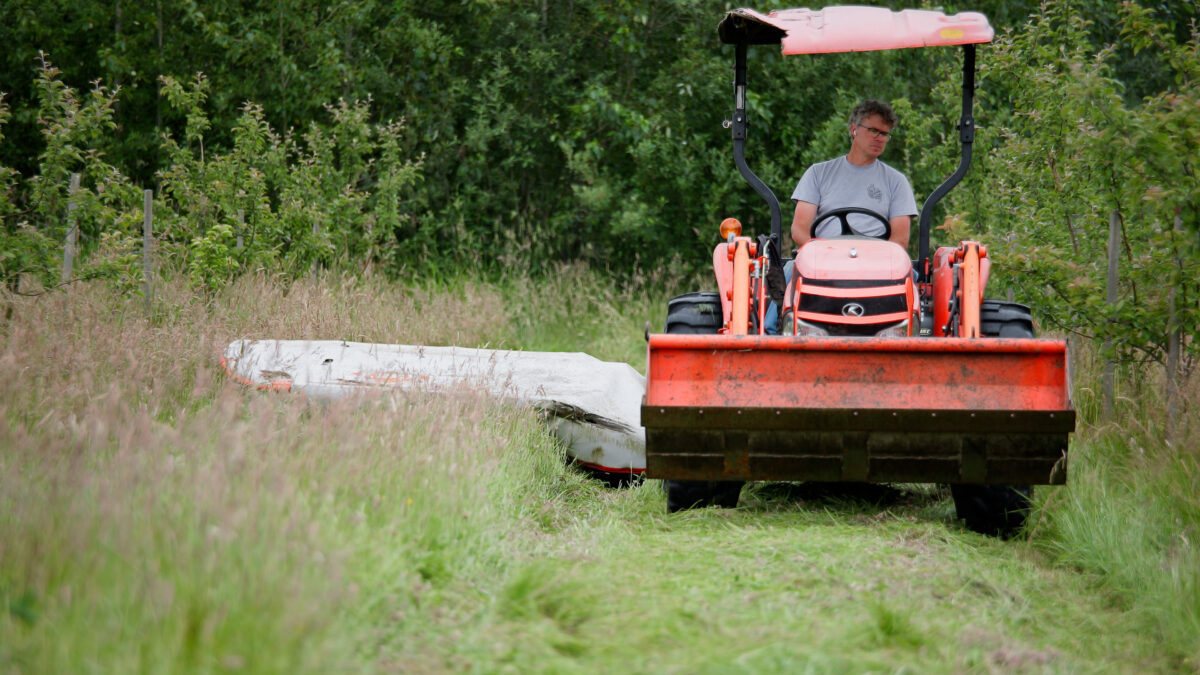
Nichlos Pate mows a hayfield that he established in an apple orchard in an effort to improve soil health and water management on his farm. Photo by LD Productions
The Impacts
The two-year project wasn’t long enough to gain a complete economic picture, because the cider trees he established needed several more years to reach their full production potential. But, according to Pate, all of the yield, soil and economic data he collected has provided an important baseline that will influence future management goals. Specific impacts regarding how he shared his experience with other farmers include:
- Pate held two farm tours during the project, involving a total of 53 farmers and service providers. He also created a factsheet summarizing the project’s costs and outcomes.
- A total of 22 producers reported gaining knowledge, attitude, skills and/or awareness as a result of the project, according to Pate.
- A total of four producers intended to change a practice as result of this project, Pate reported.
Learn more: See the related SARE project FW21-374.