Energy Conservation & Renewable Energy
Agricultural Educators and Clean Energy in the North Central Region
Type: North Central SARE Promotional Product
This feature is a summary of the results of the 2007 NCR-SARE Professional Development Program projects that were awarded grants for the speical call on bioenergy and energy-efficiency.
Anaerobic Digestion Course
Type: North Central SARE Grantee-Produced Info Product
In association with an NCR-SARE Professional Development Program grant, the Bioenergy Training Center has developed an Anaerobic Digestion Course to provide educational training resources focused not only on the technical feasibility anaerobic digesters but also on approaches and processes that assist communities in understanding the comprehensive implications of bio-based alternative energy. This course can provide foundational materials for teaching undergraduates or for community education sessions.
Biodiesel on the Farm
A Midwest Homecoming Conference Session
Type: Presentation
What's working, what's not, and what's needed for closer-to-home biodiesel production. Includes a discussion of waste vegetable oil, bio-diesel crops, processing of oilseed as feedstocks and federal and state financial incentives.
Bioenergy
Type: North Central SARE Portfolio Brief Sheet
Farmers, politicians, and investors across the U.S. are enthusiastic about the potential economic benefits and use of energy crops to revitalize the rural landscape. NCR-SARE hopes to more clearly articulate the need to use a systems approach to identify critical questions, develop innovative solutions, and solve both on-site and off-site problems that might limit the sustainable development of bioenergy production. NCR-SARE has invested in research and education projects to help achieve the sustainability of all aspects of bioenergy and those communities that support bioenergy.
Bioenergy and Renewable Energy Community Assessment Toolkit
Facilitating community participation in renewable energy development
Type: North Central SARE Grantee-Produced Info Product
This toolkit provides a decision making tool (the matrix) to guide communities toward developing their own standard of sustainability and criteria for meeting that standard.
Biofuels and Community Participation
Type: North Central SARE From the Field Profile
Extension and other natural resource educators can provide educational programming on renewable energy and potential impacts at the community level, and can be facilitators of community discussions about renewable energy. Sharon Lezberg provided training materials to approximately 100 extension, NRCS educators, and community stakeholders on ways to engage community members and stakeholders in assessing proposed bioenergy developments.
Brew Your Own Biofuel
New American Farm Conference Breakout Session
Type: Presentation
Curious about how to make your own fuel to cut costs and save energy? Farmer and researcher pioneers talk about best blends, production strategies, financial considerations and do’s and don’ts of producing biofuel for on- and off-farm use.
Clean Energy Farming
Cutting Costs, Improving Efficiencies, Harnessing Renewables
Type: Bulletin
Clean Energy Farming: Cutting Costs, Improving Efficiencies, Harnessing Renewables features innovative SARE-funded research and examples of farmers who are improving energy efficiency while saving money, implementing farming practices that both save energy and protect natural resources, and producing and using renewable fuels.
Conservation of Groundwater Resources in the Mojave High Desert Region through Producer Education of Irrigation Management
FW03-318, Grant Poole, California
Type: Western SARE Project Summary
Conservation Tillage Forage Production in California’s San Joaquin Valley
FW06-308, Jeff Mitchell, California
Type: Western SARE Project Summary
Cover Crops Survey Analysis
Type: North Central SARE Presentation
Cover crop adoption has been increasing rapidly in the last 5 years, with an estimated 1.5 to 2.0 million acres of cover crops planted in the U.S. in 2012. To learn more about this trend, during the winter of 2012-13, the Conservation Technology Information Center (CTIC) carried out an NCR-SARE-funded survey of farmers who have grown cover crops. This analysis includes results from that survey.
Developing an Energy Efficient, Solar-Heated Greenhouse in Maryland
Farmer and Rancher Innovations
Type: Northeast SARE Ag Innovations
This project investigated the effectiveness of energy-efficient greenhouse design and the ability of water-heating solar panels to heat a greenhouse as a propane alternative.
Does a C3-C4 Forage Mix Simultaneously Improve Forage Production and Carbon Sequestration?
Type: North Central SARE From the Field Profile
University of Wisconsin-Madison graduate student, Herika Kummel, conducted an experiment in two restored prairies in southern Wisconsin to assess their carbon sequestration potential under a gradient of warm-season grass (C4) to cool-season (C3) pasture grass ratios. The sites were the Bison Ridge Ranch in Marquette County and the Wisconsin Integrated Cropping Systems Trial (WICST) at the University of Wisconsin–Madison’s Arlington Agricultural Research Station in Columbia County.
Earthen Path Organic Farm
Steven Schwen
Type: Multimedia
Steven Schwen’s farming roots were established during the ‘back to the land’ movement in the 1970s. Earthen Path Organic Farm grew out of his vision of a sustainable world based on local economies.
Educational Curricula and Professional Development Training for Energy Efficient Production Practices
Type: North Central SARE From the Field Profile
David Clay’s long-term goals for his project were to increase producers’ awareness of the importance of determining costs of production, as well as conducting energy efficiency and environmental sustainability assessments during long-term planning. Clay edited curricula suitable for use in training sessions and conducted seven related workshops and 31 presentations.
Energy Conservation for Livestock and Poultry Production Webinar
Type: North Central SARE Grantee-Produced Info Product
This webinar describes key ways to conserve energy while enhancing animal well-being and production.
Energy Education for Producers
Type: Western SARE Grantee-Produced Info Product
The profitability and sustainability of agricultural operations directly link to the consumption and production of energy.
This project developed energy education resources targeted at meeting the needs of ag professionals through web-based tools, energy training, and educational tool kits. The E3A website contains most of the toolkit materials.
Energy Efficiency and Conservation on the Farm
New American Farm Conference Breakout Session
Type: Presentation
As energy prices rise, fuel-related costs claim an ever-bigger portion of farm budgets. Learn how farm energy experts, producers and NGOs can work together to manage and improve energy efficiency.
Energy Independence: On-Farm Biodiesel Fuel Production
Roger Rainville
Type: Multimedia
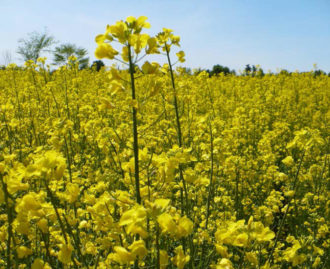
Roger Rainville is ahead of the curve when it comes to reducing costs on his farm near Alburgh, Vt. He’s currently producing biodiesel from canola and sunflower for about $1.70 a gallon.
Equine Foresty: A Minnesota Logger Seeks to Educate the Public on Low-Impact Forest Harvesting
Type: North Central SARE From the Field Profile
After working at a treatment facility for juveniles for 16 years, Tim Carroll never planned to have a successful career logging with horses. But when Carroll married his wife, Doreen, who had three riding horses, he soon grew attached to draft horses and began using them to plow his driveway and do other work on his property.
Soon after, down the road from his home in Minnesota, Carroll noticed a neighbor had hired a machine logger. The rest, you could say, is history.
Exploring Energy Efficiency and Alternatives Curriculum
Type: Western SARE From the Field Profile
To increase producers’ knowledge of energy issues, the “E3A Project” created energy education resources targeted at meeting the needs of producers and ag professionals by developing materials, web-based tools, an in-depth energy training and educational toolkits.
Extension Agent Dynamo + Farmer Ingenuity = Great Solutions
Type: Northeast SARE From the Field Profile
University of Vermont Extension Specialist Heather Darby partners with colleagues and farmers to advance research in biofuel production, organic grains for dairies, and value-added wheat for local bakeries.
Greenhouse Energy Conservation Strategies and Alternative Fuels
Type: North Central SARE From the Field Profile
Many greenhouse growers are looking for options to reduce their energy costs, but they don’t always understand which options will provide the greatest return on investment. For his project, Scott Sanford developed curriculum materials, extension bulletins, resource lists, and a spreadsheet model for educators to use for delivering programming on energy management and conservation for greenhouse production.
Greenhouse Energy Conservation Strategies and Alternative Fuels
Type: North Central SARE Grantee-Produced Info Product
Includes curriculum materials, extension bulletins, resource lists, and a greenhouse energy model that were developed with the intention that educators can use the materials in full or part to deliver programming on energy management and conservation for greenhouse production.
Greenhouse Energy Webinar Series
Type: North Central SARE Grantee-Produced Info Product
Growers can often reduce energy cost by 30 to 50% by using energy efficient growing practices, tightening the greenhouse enclosure to reduce infiltration losses, replacing inefficient heating systems, and installing curtain systems.
This 3-part webinar series covers energy measures for greenhouses, thermal curtain systems for greenhouses, and the use of biomass energy for heating greenhouses.
Growing Biodiesel Crops: A Couple of Tips
Roger Rainville
Type: Multimedia
In this short video, Rainville describes his philosophy for trying something new on your farm. It’s all about making the most of the learning curve.
High Tunnel Temperature Management
Type: Northeast SARE Grantee-Produced Info Product
Temperature management is one of the most critical factors in successful production of many high tunnel crops. This West Virginia University fact sheet includes recommended temperature ranges for common crops.
Impact of Biomass Removal for Bioenergy
Type: North Central SARE From the Field Profile
The rapid increase in ethanol production from corn grain, and the proposed use of crop residues for ethanol production poses significant challenges in increasing awareness and providing needed training to extension educators and agency staff to address the potential environmental impacts of intensive corn production and corn residue use. For this reason, Mahdi Al-Kaisi conducted an educational training program on residue management through a series of workshops, webinars, and field training sessions across Iowa.
Improved Productivity in Winter Greenhouse Video
Type: North Central SARE Multimedia
This video features farmer rancher grant recipients, Carol Ford and Chuck Waibel, and their winter CSA. They show us different types of Asian greens grown in their passive solar green house.
Increasing Adoption of Sustainable Practices in Central Coast Vineyards
FW03-010, Kris O'Connor, California
Type: Western SARE Project Summary
Increasing Crop Water Efficiency in Advanced No-Till Systems
SW02-005, Perry Miller, Montana
Type: Western SARE Project Summary
Indiana Farmers Experiments with Geothermal Climate Controlled Storage Facilities to Lower Utility Costs
Type: North Central SARE From the Field Profile
In Carthage, IN, Anna and Keith Welch are creating a geothermal model that uses sustainable energy to lower their utility costs for grain storage.
Innovative Greenhouse Design: Extend Your Season!
New American Farm Conference Breakout Session
Type: Presentation
Learn how to combine renewable energy and innovative greenhouse design and siting to grow new, lucrative crops and extend your growing season. Two hands-on experts share their experiences and strategies.
Integrated Alternative Energy and Livestock Production Systems
Type: North Central SARE From the Field Profile
Michael Siepel’s SARE grant project provided training on selected alternative energy topics, emphasizing interconnections between livestock production, renewable energy, and energy conservation. Attendees at Seipel’s first annual conference learned about grassy biomass, woody biomass, wind energy, financing bioenergy projects, and case studies of bioenergy enterprises.
Irrigation Energy Webinar Series
Type: North Central SARE Grantee-Produced Info Product
In this three part webinar series, participants will became familiar with how to determine how much energy is required if all components of the irrigation system are operating at near peak efficiency.
Managing Field Operations to Reduce Energy Costs Webinar
Type: North Central SARE Grantee-Produced Info Product
This webinar makes the case for using minimum tillage, timely routine tractor maintenance, crop rotations with legumes and shorter maturity corn to reduce drying costs.
Missouri Farmer Develops Sustainable Irrigation System for Organic Vegetable Production Systems
Type: North Central SARE From the Field Profile
In Ashland, MO, Dan Kuebler is creating an affordable, efficient, and sustainable irrigation system for a two acre organic vegetable operation. Since 1977, Dan Kuebler has been running a certified organic garden operation in Ashland.
Missouri Producer Envisions Future Fiber Fuel Jobs
Type: North Central SARE From the Field Profile
In Kingsville, MO, a perennial and native seed crop producer has been developing and processing energy crops and agricultural residues into biomass engineered fiber fuel, and now he and other producers in MO could help determine the future of cellulosicbased biofuels.
Moving Nursery Producers Toward Sustainable Practices Video Series
Type: Southern SARE Grantee-Produced Info Product
This video series describes measures nursery producers can take to improve sustainability in the areas of irrigation, energy use, runoff, recycling and more.
Nebraska Greenhouse Operator Evaluates the Feasibility of Biomass Heating
Type: North Central SARE From the Field Profile
In Firth, NE, Stacy Adams operates a family greenhouse business as a second income.
Adams is a professional horticulturist, raised in construction. For many years Adams has been a building manager and actively involved with renovation of greenhouse structures and mechanical repairs at his place of employment.
New Mexico Grower Saved by the Sun
Type: Western SARE From the Field Profile
Don Bustos has used solar energy to cut his winter greenhouse heating bill to almost nothing.
Nitrogen-Fixing Species in Hedgerow Intercropping in the Marianas
SW99-048, Mari Marutani, Guam
Type: Western SARE Project Summary
No-Till Forage Establlishment to Improve Soil and Water Conservation and Reduce Associated Production Risks
SW97-012, Steve Sparrow, Alaska
Type: Western SARE Project Summary
On-Farm Biodiesel 101
Type: Northeast SARE From the Field Profile
A SARE-funded workshop series is helping farmers produce their own biodiesel, saving money and reducing their carbon footprint.
On-Farm Energy Conservation & Efficiency Course
Type: North Central SARE Grantee-Produced Info Product
In association with an NCR-SARE Professional Development Program grant, the Bioenergy Training Center has developed the On-Farm Energy Conservation & Efficiency Series to provide educational training resources focused not only on the technical feasibility of on-farm energy conservation, but also on approaches and processes that assist communities in understanding the comprehensive implications of bio-based alternative energy. This course can provide foundational materials for teaching undergraduates or for community education sessions.
Organic Dairy 101: A Workshop for Agricultural Professionals Systems
Type: North Central SARE From the Field Profile
The Organic Dairy Short Course for Ag Professionals, a Professional Development Grant Program project, aimed at improving the ability of public and private sector agricultural educators and advisors to serveorganic and transitional organic dairy producers.
The project developed, delivered, and evaluated a professional development training module called “Organic Dairy 101: A Workshop for Agricultural Professionals” at four locations in Minnesota and three in Wisconsin, training a total of 174 dairy andagriculture professionals.
Reducing and Producing Farm Energy: Success Stories
A Midwest Homecoming Conference Session
Type: Presentation
Learn about whole-farm energy solutions and creating energy through wind generation and anaerobic digesters. This session will also cover reducing farm energy and improving efficiency.
Renewable Energy
A Midwest Homecoming Conference Session
Type: Presentation
Individual presentations on an overview of renewable energy, the potential for on-farm energy production, USDA energy initiatives, and renewable energy and rural development.
Renewable Energy and Sustainable Agriculture Symposium
Exploring the Crossroads
Type: Presentation
SARE convened this symposium on Feb. 13, 2006 in Washington, D.C. to address the growing interest in the intersection of sustainable agriculture and renewable energy.
Replacing Imported Energy Feeds
FW06-307, James Currie
Type: Western SARE Project Summary
SARE Fuel Projects
Type: Southern SARE Bulletin
Southern SARE Fuel Projects
SARE Publications Kit
Type: National SARE Promotional Product
Order an entire set of SARE Outreach books and bulletins for one low price.
Solar Energy for Winter Food Production
New American Farm Conference Poster
Type: Poster
Solar Energy for Winter Food Production, presented by Don Bustos (New Mexico).
Solar Energy for Year Round Production
FW05-011, Don Bustos, New Mexico
Type: Western SARE Project Summary
A New Mexico farmer uses a solar-powered root-zone thermal heating system in his greenhouses.
Storage and Utilization of Ethanol Co- Products by Small Cattle Operations
Type: North Central SARE From the Field Profile
Francis John Hay’s SARE project focused on storage techniques for wet ethanol co-products and how those co-products could be used in small cattle operations. For his project, Hay prepared educators to teach ethanol co-products storage techniques. Conferences attracted nearly 300 educators from ten states. Written materials and videos extended the reach of this project through the internet with more than 30,000 individual downloads of educational materials.
Success with Renewable Energy
New American Farm Conference Breakout Session
Type: Presentation
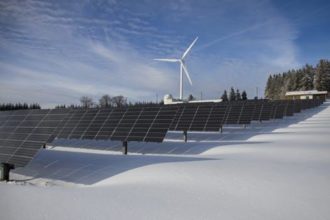
Solar power distills orchard waste fruit into clean-burning, high-octane fuel to power farm equipment. Recycled solar panels heat a new greenhouse, extending a short growing season and cutting fossil fuel bills. Two innovative farmers share their experiences with affordable renewable energy systems.
Sustainable Bioenergy Course
Type: North Central SARE Grantee-Produced Info Product
In association with an NCR-SARE Professional Development Program grant, the Bioenergy Training Center, in collaboration with the Farm Energy CoP, has developed a Sustainable Bioenergy Course to provide educational training resources focused not only on the technical feasibility of bioenergy generation, but also on approaches and processes that assist communities in understanding the comprehensive implications of bio-based alternative energy. This course can provide foundational materials for teaching undergraduates or for community education sessions.
Sustainable Renewable Energy Training for Agriculture and Natural Resource Professionals
Type: North Central SARE From the Field Profile
Marin Byrne and Jim Kleinschmit’s series of six training sessions for more than 340 attendees focused on sustainability and renewable energy for natural resource and agriculture educators throughout Minnesota and Wisconsin. Farm field days, tours, and workshops addressed topics such as alternative bioenergy crops and production methods, whole farm planning for renewable energy, and on-farm energy production and efficiency.
Temperature Management in High Tunnels
Type: Western SARE Grantee-Produced Info Product
Understanding a crop's temperature requirements is the key to high tunnel management. This Utah State University fact sheet spells out temperature considerations and how these are best addressed using high tunnels and other season-extending technologies.
Thermal Banking for Cold Storage
Steven Schwen
Type: Multimedia
Steven Schwen's innovative energy conservation strategy uses thermal banking technology to conserve heat in his greenhouse and for cold storage.
Thermal Banking Greenhouses
Steven Schwen
Type: Multimedia
Steven Schwen uses thermal banking to significantly reduce the energy costs of running a greenhouse for cold-season production.
Thousands Trained in Renewable Energy and Efficiency
Type: Southern SARE From the Field Profile
Information shared during a three-day training for Extension professionals on renewable energy topics—including biofuels, energy efficiency, and wind and solar energy—has benefited thousands of farmers in the South.
Zone tillage for corn in the Northeast
Type: Northeast SARE Grantee-Produced Info Product
An eight-minute video that explores the benefits of alternative tillage techniques in corn grown for biofuels.