• WebStore |
  • Advanced Search |
  • MySARE Login |
  • SARE Social Media |
  • Contact Us |
  • SANET Listserv |
  • Low Bandwidth |
Search MySARE Reports
  • Grants
    • Apply for a Grant
    • Funded Grants in Your State
  • Project Reports
    • Submit a Report
    • Search the Database
    • Project Search Tips
    • About Project Reports
    • About Search Results
    • Project Products
  • Learning Center
    • Books
    • Bulletins
    • Fact Sheets
    • Topic Rooms
    • From the Field
    • Newsletters
    • Multimedia
    • Courses and Curricula
    • Project Products
    • SARE Biennial Reports
    • SANET Listserv
    • SARE Program Materials
    • Conference Materials
    • WebStore
  • Professional Development
    • PDP Overview
    • Fellows & Search for Excellence Programs
    • Sample PDP Grant Projects
    • Educator Curriculum Guides
    • National Continuing Education Program
    • State Coordinator Contact Information
  • State Programs
    • State Coordinator Program Overview
    • State Coordinator Contact Information
    • Funded Grants in Your State
  • Events
    • Event Calendar
    • Past Conferences
  • Newsroom
    • Press Releases
    • SARE in the News
    • Media Contacts
    • Newsletters
    • Media Toolkit
    • A Guide To This Site
    • SARE and Social Media
  • About SARE
    • SARE's Four Regions
    • SARE Grants
    • Learning Center
    • Professional Development
    • SARE Outreach
    • Historical Timeline
    • Staff
    • Vision & Mission
    • Join Our Mailing List
    • What is Sustainable Agriculture?
  • Home»
  • Learning Center»
  • From the Field»
  • Southern SARE From the Field»
  • A Toolbox of Innovations to Control Small Ruminant Parasites
facebook
Twitter
YouTube
- + Font Size
Print
Share
  • by Type
  • by Topic
  • Books
  • Bulletins
  • Fact Sheets
  • Topic Rooms
  • From the Field
    • View all From the Field
    • North Central SARE From the Field
    • Northeast SARE From the Field
    • Southern SARE From the Field
    • Western SARE From the Field
  • Newsletters
  • Multimedia
  • Courses and Curricula
  • Project Products
  • SARE Biennial Reports
  • SANET Listserv
  • SARE Program Materials
  • Conference Materials
  • WebStore
  • Animal Production
  • Community Development
  • Cover Crops
  • Crop Production
  • Economic/Marketing
  • Education & Training
  • Energy Conservation & Renewable Energy
  • For Consumers
  • Integrated Systems
  • Natural Resources/Environment
  • Pest Management
  • Quality of Life
  • Season Extension
  • Soil Management
  • Specialty Crops
  • Value Added
  • WebStore

Southern SARE From the Field Profile

A Toolbox of Innovations to Control Small Ruminant Parasites

20.20_20

The growing ranks of ethnic groups across the South have spurred a sudden demand for specialty meats, particularly goat and sheep. Sales have been brisk. A wrench in the works, however, threatens the new businesses: widespread invasion of Haemonchus contortus, or barber pole worm.

The blood sucking parasite lodges in the animals' intestines, causing anemia, bottle jaw and eventually death if left untreated. Overuse of chemical dewormers has greatly increased the worms' resistance, making them almost impossible to control. One female can lay more than 5,000 eggs per day.

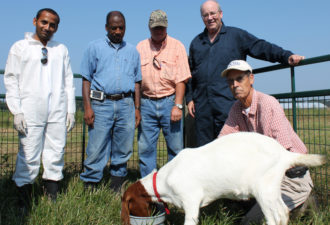
Thanks to funding from SARE, the Southern Consortium for Small Ruminant Parasite Control (SCSRPC) was formed to research and educate farmers on alternative parasite control.

The consortium's scientist, veterinarian and extension members developed a toolbox of affordable techniques that dramatically reduced the need for costly and increasingly ineffective chemical deworming agents.

A diagnostic tool called famacha is one of the consortium's important findings. The tool is a chart that matches eyelid color to anemia levels, an indicator of parasite infection. This allows farmers to target treatment only to infected animals, which in some systems has reduced use of deworming agents by 90 percent.

FAMACHA has become the standard in detection and costs only $10 for a card printed with the chart. According to Thomas H. Terrill of Fort Valley State University, one of the founders and current coordinator of the consortium, more than half of the charts - about 11,000 - have been sold in the United States. "It's an indication of how big a problem it is in the U.S.," says Terrill. "The farmers were desperate and it's a cheap, simple tool."

Linda Coffey, a goat farmer and specialist, says FAMACHA has had a great impact. "It reduces dewormer use, thus saving money, and it slows down resistance problems. Just as important, it allows the farmer to select breeding stock that is not anemic. That strengthens the flock over time."

Feeding copper oxide wire particles to parasitized animals is another promising method. Although reasons are unclear, this reduces infection rates in lambs and kids up to 90 percent.

Terrill is focusing on sericea lespedeza, a forage containing high amounts of tannins, which dramatically reduce parasites in many types of livestock. Terrill's project is one of a handful of SARE-funded research projects investigating the forage, including projects on an Ohio farm and at Louisiana State University. Another SARE project at the University of Maryland Eastern Shore is exploring high-tannin grain sorghum to control parasites.

Terrill says there is no silver bullet for parasite control. "It's a combination of tools. So we are moving into the next phase of trying to figure out the right anti-parasitic formula for each farm."

For more information, go to SARE's database of projects and search for LS02-143 (SCSRPS), LNE05-232 (UMES), GS07-059 and GS05-047 (LSU), and FNC05-564 (Ohio).

Want more information? See the related SARE grant(s) LS02-143, Novel Methods for Sustainable Control of Gastrointestional Nematodes in Small Ruminants, LNE05-232, High tannin grain sorghum as a possible natural anthelmintic for sheep and goats, GS05-047, Effect of a condensed tannin containing forage (sericea lespedeza), fed as pellets, on natural and experimental challenge nematode infection in lambs, FNC05-564, Grazing Forages High in Condensed Tannins and its Effect on Fecal Egg Counts in Meat Goats, and GS07-059, Effect of a grazing sericea lespedeza as a treatment padock for controlling natural nematode infection in lambs.


How to Order

Only available online


More Small Ruminant Resources

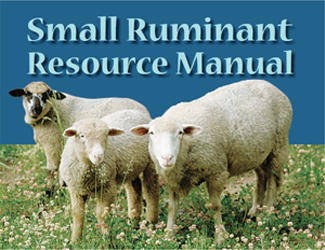
You may be interested in these stories and resources on small ruminants, created for Southern producers but also applicable in other parts of the country:

Sustainable Control of Internal Parasites in Small Ruminant Production (fact sheet)

FAMACHA: Sustainable Control of GI Nematodes in Small Ruminants (grantee-produced tool)

A Toolbox of Innovations to Control Small Ruminant Parasites (From the Field profile)

Multi-State Resource Tool Addresses Small Ruminant Production Needs (From the Field profile)

25th SARE logo USDA Logo

1122 Patapsco Building | University of Maryland | College Park, MD 20742-6715

This Web site is maintained by the national outreach office of the SARE program, supported by the National Institute of Food and Agriculture, U.S. Department of Agriculture.

North Central SARE | Northeast SARE | Southern SARE | Western SARE

Sustainable Agriculture Research & Education ©2012

  • Help |
  • RSS Feeds |
  • A Guide To This Site