• WebStore |
  • Advanced Search |
  • MySARE Login |
  • SARE Social Media |
  • Contact Us |
  • SANET Listserv |
  • Low Bandwidth |
Search MySARE Reports
  • Grants
    • Apply for a Grant
    • Funded Grants in Your State
  • Project Reports
    • Submit a Report
    • Search the Database
    • Project Search Tips
    • About Project Reports
    • About Search Results
    • Project Products
  • Learning Center
    • Books
    • Bulletins
    • Fact Sheets
    • Topic Rooms
    • From the Field
    • Newsletters
    • Multimedia
    • Courses and Curricula
    • Project Products
    • SARE Biennial Reports
    • SANET Listserv
    • SARE Program Materials
    • Conference Materials
    • WebStore
  • Professional Development
    • PDP Overview
    • Fellows & Search for Excellence Programs
    • Sample PDP Grant Projects
    • Educator Curriculum Guides
    • National Continuing Education Program
    • State Coordinator Contact Information
  • State Programs
    • State Coordinator Program Overview
    • State Coordinator Contact Information
    • Funded Grants in Your State
  • Events
    • Event Calendar
    • Past Conferences
  • Newsroom
    • Press Releases
    • SARE in the News
    • Media Contacts
    • Newsletters
    • Media Toolkit
    • A Guide To This Site
    • SARE and Social Media
  • About SARE
    • SARE's Four Regions
    • SARE Grants
    • Learning Center
    • Professional Development
    • SARE Outreach
    • Historical Timeline
    • Staff
    • Vision & Mission
    • Join Our Mailing List
    • What is Sustainable Agriculture?
  • Home»
  • Learning Center»
  • Fact Sheets»
  • Selecting Cattle to Improve Grazing Distribution Patterns, Rangeland Health...
facebook
Twitter
YouTube
- + Font Size
Print
Share
  • by Type
  • by Topic
  • Books
  • Bulletins
  • Fact Sheets
  • Topic Rooms
  • From the Field
  • Newsletters
  • Multimedia
  • Courses and Curricula
  • Project Products
  • SARE Biennial Reports
  • SANET Listserv
  • SARE Program Materials
  • Conference Materials
  • WebStore
  • Animal Production
  • Community Development
  • Cover Crops
  • Crop Production
  • Economic/Marketing
  • Education & Training
  • Energy Conservation & Renewable Energy
  • For Consumers
  • Integrated Systems
  • Natural Resources/Environment
  • Pest Management
  • Quality of Life
  • Season Extension
  • Soil Management
  • Specialty Crops
  • Value Added
  • WebStore

Fact Sheet

Selecting Cattle to Improve Grazing Distribution Patterns, Rangeland Health and Water Quality

05AGI2005
Download Product

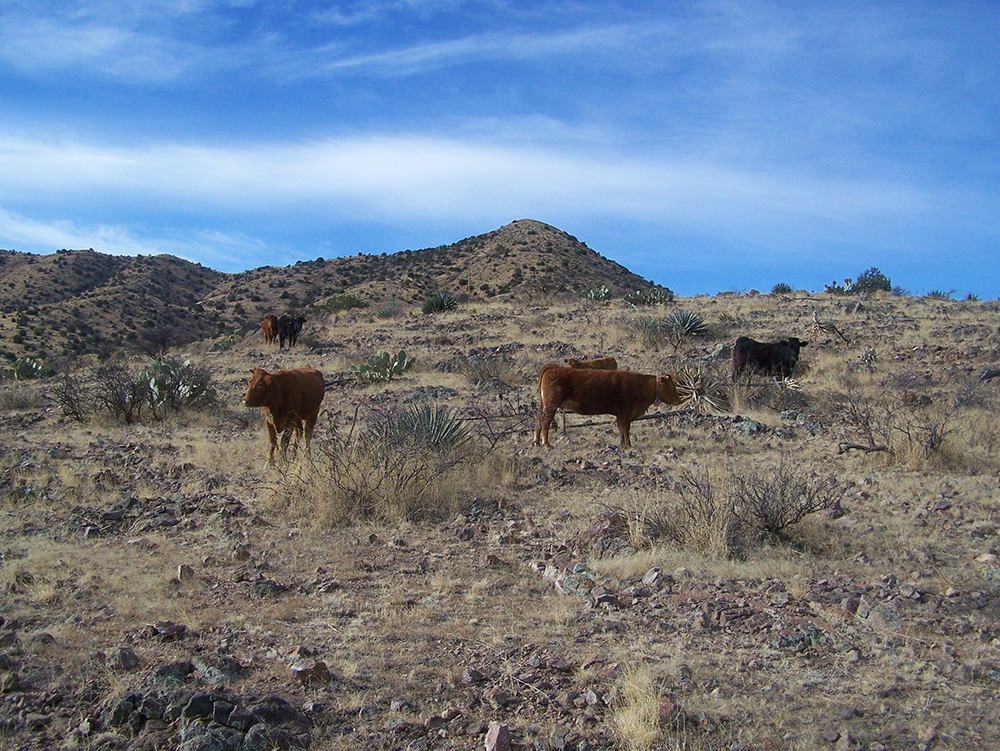
Livestock grazing distribution is a critical concern for grazing lands, especially on extensive and rugged pastures. Rangeland health, riparian area condition, water quality, fisheries habitat, and threatened and endangered species are all affected by uneven grazing patterns. Cattle may more heavily graze areas with gentle terrain near water than rugged terrain or areas far from water, often preferring riparian areas where they spend a disproportionate amount of time compared to uplands. Yet, concentrated grazing, especially in riparian zones, may reduce vegetative cover and increase soil erosion. Often, extensive and rugged pastures that experience problems associated with grazing have sufficient forage, but suffer from adverse impacts to natural resources from localized heavy grazing. The key to resolving such problems is to use pastures as evenly as possible.

Most of the management approaches currently used to increase grazing uniformity, such as water developments and fencing, can resolve livestock grazing distribution problems on both private and public lands. However, these practices usually require large capital expenditures. As a result, ranchers and land managers are often reluctant to develop water and build new fences. Less expensive solutions, such as salting away from water, are usually not effective enough to sufficiently alter cattle grazing patterns. New management techniques are needed.

Selecting cattle with desirable grazing patterns and culling cattle with undesirable grazing patterns has been suggested as a tool for improving distribution. Research conducted in southern Idaho found that cattle maintained certain home ranges, some grazing primarily uplands and others grazing meadows and riparian areas. Thus, removing animals that concentrate in over-utilized areas and selecting animals that travel farther from water and up steeper slopes has the potential to improve livestock grazing distribution.

This project is the first and only study that we are aware of that has evaluated whether grazing distribution has the potential to be improved through intensive selection. The study was replicated and the results showed that selection for distribution has great promise and that additional research is warranted. However, there is a great deal more to learn, and many questions must be answered. This fact sheet presents a few ideas, resulting from our research, which may be useful to ranchers grazing extensive or rugged rangeland.

Geographic Adaptability: Western United States, especially on rugged terrain or extensive pastures.

Want more information? See the related SARE grant(s) SW98-064, Selecting Cattle to Prevent Grazing Distribution Problems.

Product Specs

Author: Derek Bailey, Harv VanWagoner, Robin Weinmeister
 | 
Published: 2005
 | 
Pages: 6

How to Order

Online Version (Free)
Download File (480.73 kB)
 | 
View the Online HTML

Only available online


Related Resources

You may be interested in more information about: Animal Production.

Search the MySARE project reports database for research about Animal Production.

25th SARE logo USDA Logo

1122 Patapsco Building | University of Maryland | College Park, MD 20742-6715

This Web site is maintained by the national outreach office of the SARE program, supported by the National Institute of Food and Agriculture, U.S. Department of Agriculture.

North Central SARE | Northeast SARE | Southern SARE | Western SARE

Sustainable Agriculture Research & Education ©2012

  • Help |
  • RSS Feeds |
  • A Guide To This Site