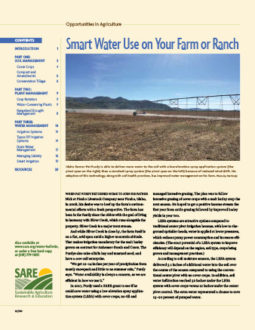
Many irrigation packages and operating methods are available. For example, with proper design and installation, a center pivot sprinkler system can achieve high irrigation efficiency and uniform application. Furrow irrigation strategies, such as tailwater recovery, irrigating every other row and polyacrylamide application, also provide ways to lower water use. Other water delivery systems include lined on-farm irrigation ditches or pipelines, drip/micro and subsurface irrigation, gated and flexible pipes for field water distribution systems and surge flows.
Types of Irrigation Systems

Surface flooding irrigation -
Standard center pivot irrigation -
Micro irrigation (drip watering) -
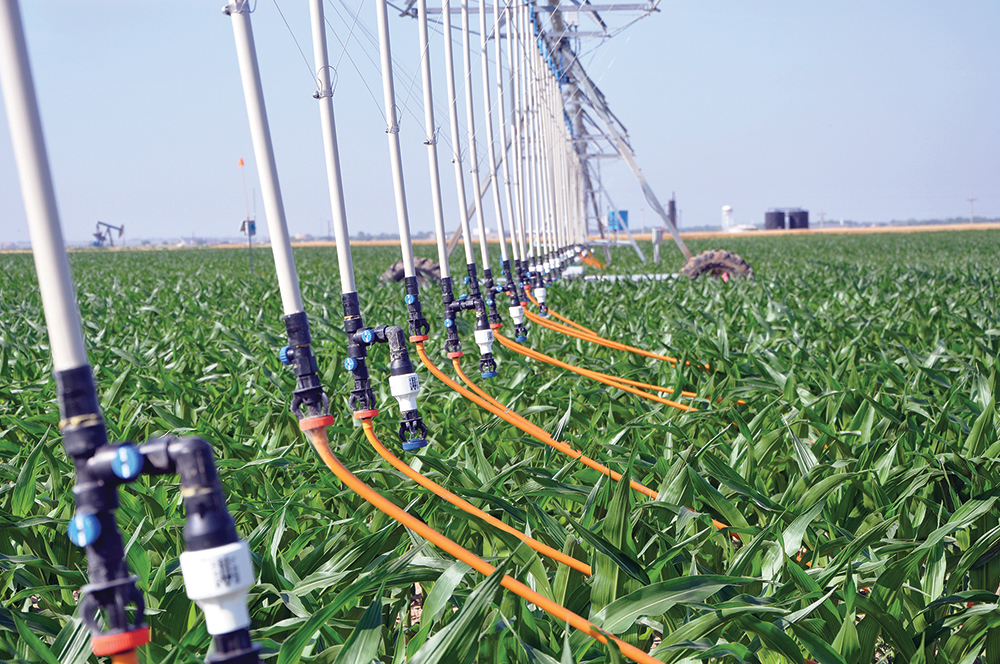
Mobile drip irrigation -
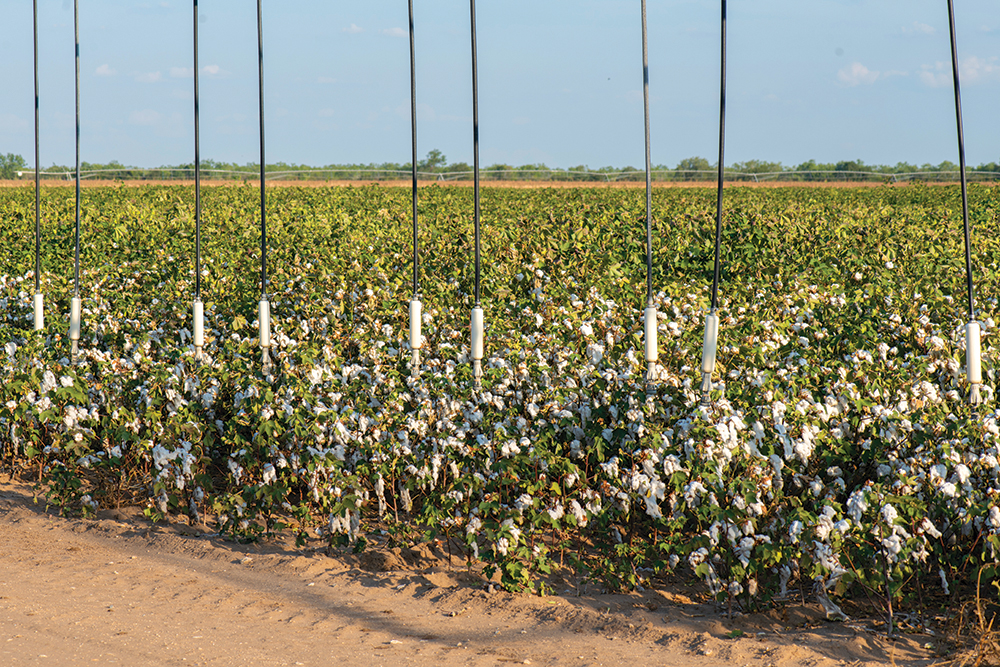
Center pivot with low-elevation application nozzles
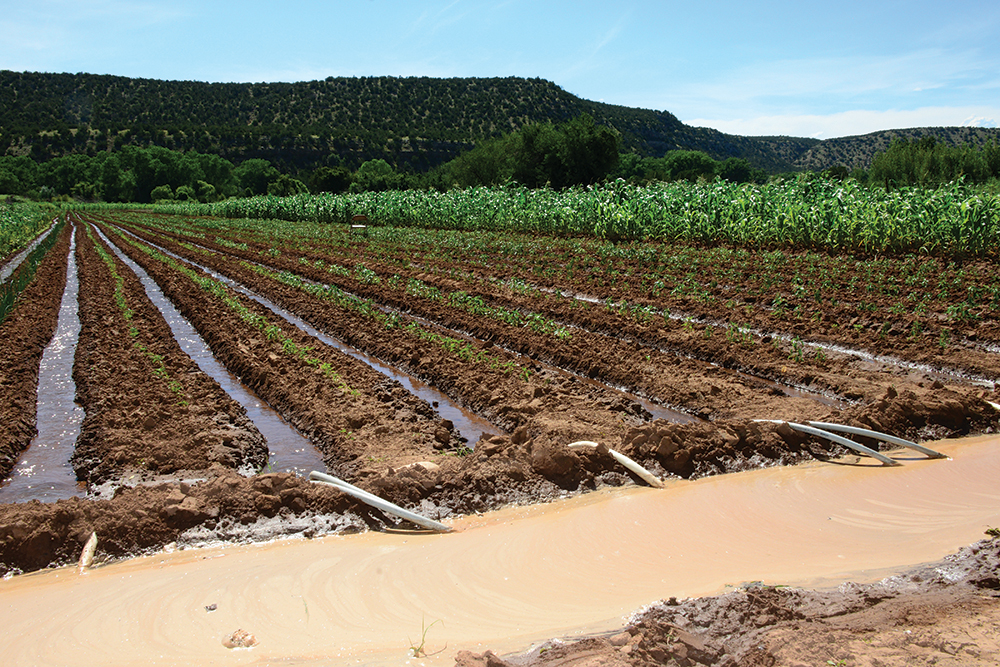
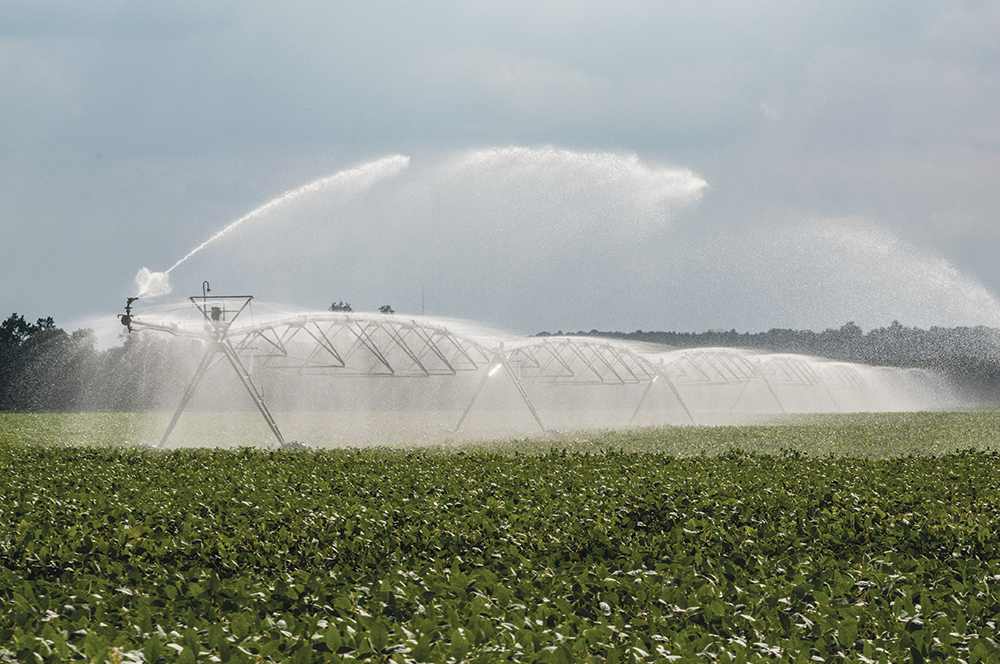
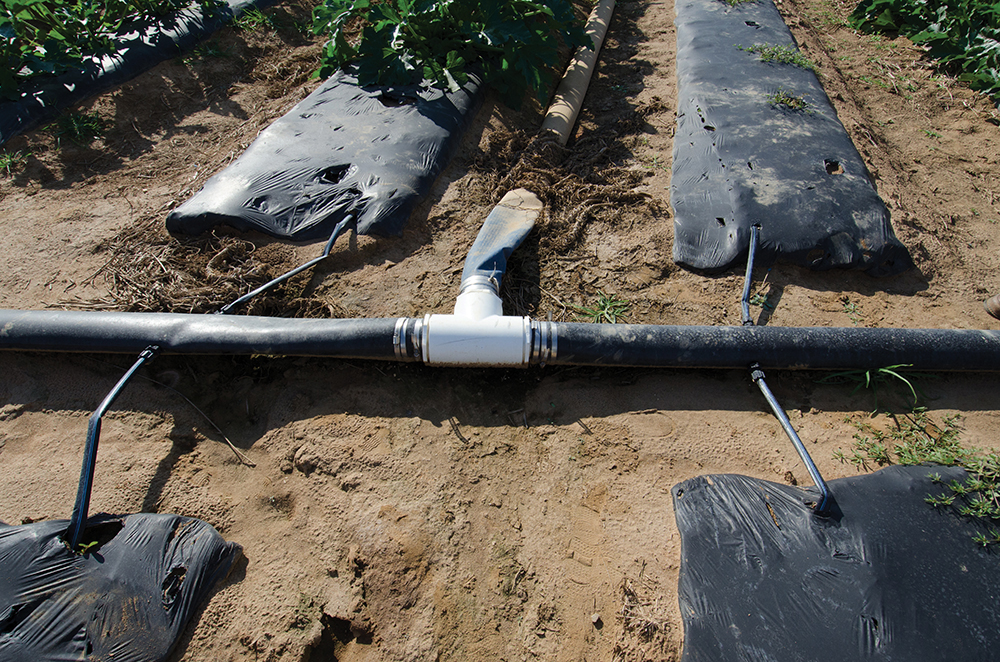
Typical irrigation systems, which can have varying degrees of efficiency and cost.
Surface irrigation supplies water to the soil surface by gravity. Surface irrigation systems can vary. Water flows over the ground and through the crop, with levees and gates used to control water depth, furrows or borders. Cascade flood irrigation involves water entering the field at the highest elevation and cascading down through a series of levee gates. Side-inlet flood irrigation involves a lay-flat pipe placed across levees with holes in it to simultaneously deliver water to each zone of the field. Surface irrigation systems are the cheapest to install and use, but water application rates are not exact and distribution across the field is typically uneven. They are most associated with salinization concerns because they may easily raise groundwater tables depending on the depth of the water table and how effective your drainage systems are. Flood irrigation is often less efficient than other systems due to the likelihood, depending on your circumstances, of experiencing higher rates of evaporation, deep infiltration or surface runoff. Techniques like land leveling, surge flooding, and capturing and reusing runoff can improve the efficiency of flood-irrigated systems.
Sprinkler irrigation applies water to crops via nozzles. Sprinkler systems use a water pump, or gravity in some cases, to build pressure and deliver water to crops through fixed or continuously moving nozzles that can be programmed to start and stop, such as with center pivot irrigation. Sprinkler irrigation works well on medium and coarse soils that have naturally higher infiltration rates. Sprinkler systems may be adapted to use on heavier soils by combining with practices like land leveling, tillage or diked furrows to help hold water while it infiltrates. Water can be applied at low rates with fertigation and chemigation, but frequent applications may be needed to recharge soils. Sprinkler irrigation improves efficiency compared to flooding systems by allowing for more precise water application rates. It does require a larger up-front investment and more energy use. Adaptations to center pivot and linear sprinkler irrigation systems can reduce water loss to evaporation and drift. These systems include:
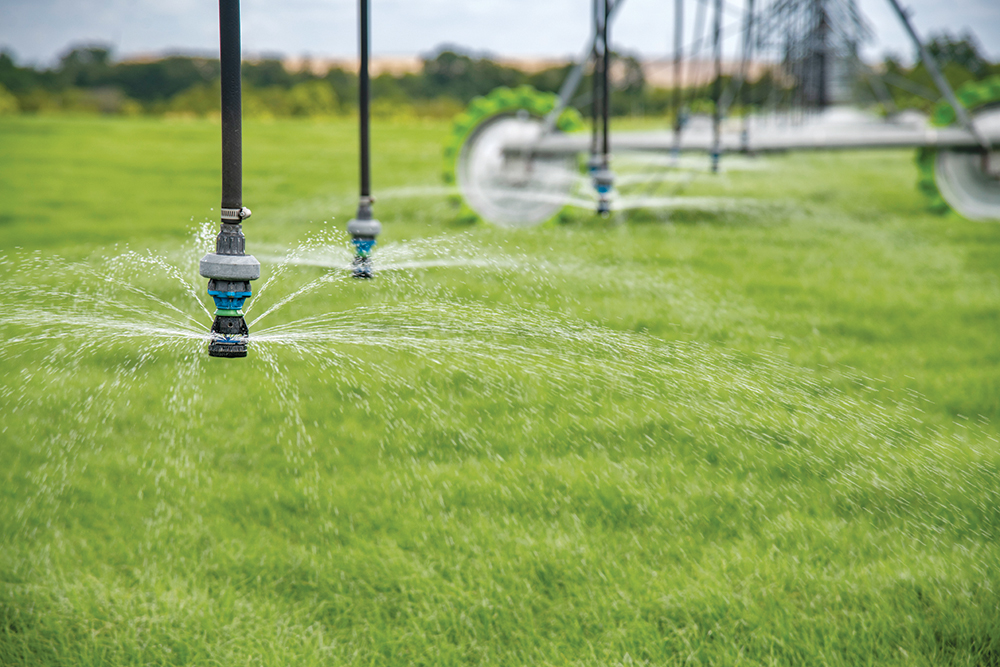
MESA, or mid elevation spray application, is a center pivot system where nozzles are spaced farther apart (10 feet) and the nozzles are higher (approximately 5–15 feet) off the ground. In MESA systems, water is delivered above the crop canopy. MESA can be less efficient than other systems because water applied above the crop canopy can be lost both to wind drift and to evaporation from the crop and soil surface. Use nozzle weights and flexible drop hoses to reduce water loss and improve water distribution.
LESA, or low elevation spray application, is a modified center pivot system where the sprinkler nozzles are spaced closer together (less than 5 feet apart) and are suspended closer to the soil surface (1–1.5 feet). LESA systems deliver water under the crop canopy and closer to the soil surface, so less water is lost to evaporation and wind drift. LESA irrigation systems run at low pressure, so they use less energy to pump water than MESA systems.
LEPA, or low energy precision application, is a modification to typical center pivot systems that uses suspended nozzles to deliver water directly to furrows at lower pressures. Nozzles are typically spaced 60–80 inches apart, and water is delivered directly to the soil up to about 18 inches from the ground. The crop canopy stays dry since water is delivered close to the soil. Drag socks can be installed to minimize furrow erosion. LEPA irrigation systems work well with low-growing crops. They minimize water loss to wind drift and evaporation, and also optimize energy use since water is run at lower pressure.
Drip irrigation delivers water to crop roots; it is supplied under low pressure through plastic tubing with emitters to regulate flow rate. Tubing can be placed on the ground or buried beneath the soil surface. Drip irrigation is efficient with water by minimizing evaporation loss. It also reduces nutrient losses from leaching. More maintenance may be required for drip irrigation, but it offers a high level of control. Drip irrigation systems may be expensive to install, but reduced water and energy use, as well as potential yield increases, makes drip irrigation systems a good investment.
Mobile drip irrigation combines features of drip irrigation with the flexibility of center pivot irrigation. Mobile drip systems consist of trickle tape attached to a center pivot system that delivers water directly to the soil surface. Water loss to wind drift and evaporation are minimal under mobile drip systems. Energy savings may be significantly improved due to the low pressure needed to run these systems.
Sub-surface irrigation delivers water beneath the soil surface through drip lines installed underground. The system is used to raise and maintain the water table near the root line. This system is less labor intensive and is good for soils with low water retention capacity and smooth, level topography; it also can double as a drainage system. Tubing and emitters must be placed close to plant roots to be effective, and lateral water flow from the trickle line through the soil is limited.
Water Harvesting
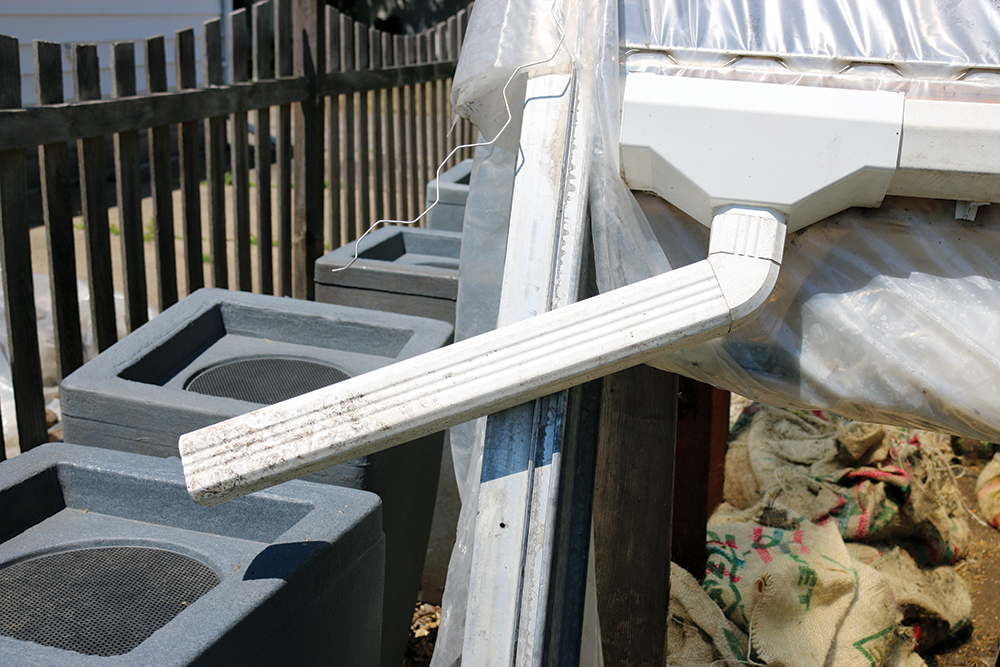
Farmers with greenhouses, high tunnels and other structures with significant roof area can consider installing systems to capture and store rainwater for irrigation. Capturing, storing and pumping the water that falls on such rooftops can be an attractive way to supplement other sources of irrigation water.
Cherry Flowers and Tim Page operate an urban farm in the Twin Cities area of Minnesota, and they saw many positives to adding a rainwater harvest system to their high tunnel, which they did with support from a SARE grant. It consists of gutters lining both sides of the structure, which drain into rain barrels. The barrels are connected to the drip irrigation system inside the tunnel, and water is pushed through by a solar-powered pump. The system can capture 600 gallons of water in a 1-inch rainfall, and in the first year of use, there were only four rain events that exceeded the capacity of the system.
Along with using rainfall to irrigate the crops inside the tunnel, Flowers and Page have found other benefits of the system: it allows them to avoid chemicals that are found in municipal water and are potentially harmful to crops, such as flouride and chlorine; it eliminates erosion and ponding around the inner and outer edges of the high tunnel, which used to occur during heavy rainfalls; and it reduces the amount of stormwater their operation contributes to the municipal sewer system