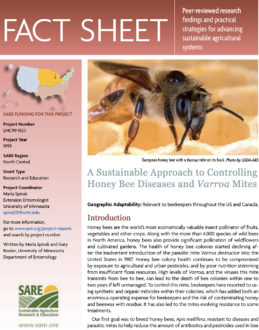
Geographic Adaptability: Relevant to beekeepers throughout the US and Canada.
Honey bees are the world's most economically valuable insect pollinator of fruits, vegetables and other crops. Along with the more than 4,000 species of wild bees in North America, honey bees also provide significant pollination of wildflowers and cultivated gardens.
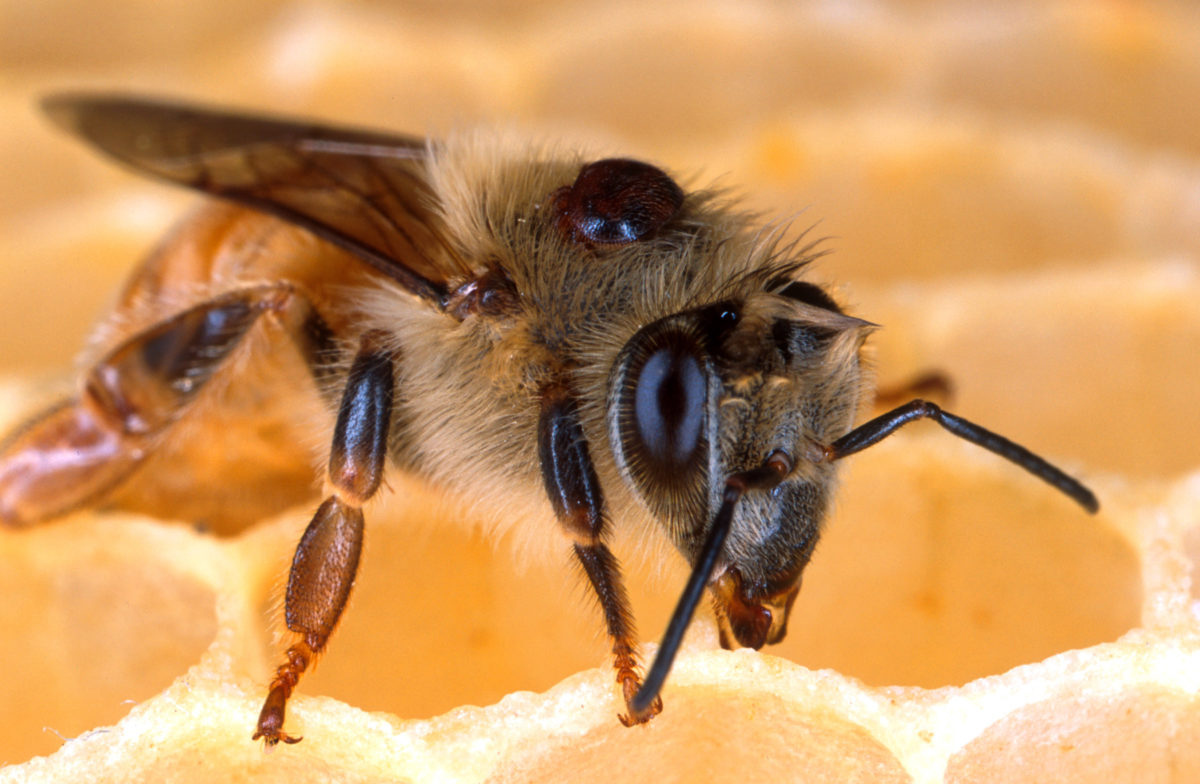
The health of honey bee colonies started declining after the inadvertent introduction of the parasitic mite Varroa destructor into the United States in 1987. Honey bee colony health continues to be compromised by exposure to agricultural and urban pesticides, and by poor nutrition stemming from insufficient floral resources. High levels of Varroa, and the viruses this mite transmits from bee to bee, can lead to the death of bee colonies within one to two years if left unmanaged. To control this mite, beekeepers have resorted to using synthetic and organic miticides within their colonies, which has added both an enormous operating expense for beekeepers and the risk of contaminating honey and beeswax with residue. It has also led to the mites evolving resistance to some treatments.
Our first goal was to breed honey bees, Apis mellifera, resistant to diseases and parasitic mites to help reduce the amount of antibiotics and pesticides used in bee colonies. Our second goal was to ensure that our selection methods could be easily implemented by beekeepers to enable them to select for their own resistant stocks of bees. A reduction in miticide use, and implementation of stock selection by beekeepers, will enhance environmental quality and economic viability of individual beekeeping operations; strengthen an agricultural system (beekeeping) that is based on small- and moderate-scale owner-operated farms; protect human health and safety by preventing the risk of contaminating honey and hive products; and promote the wellbeing of honey bees, our honey producers and vital pollinators.
Want more information? See the related SARE grant: