• WebStore |
  • Advanced Search |
  • MySARE Login |
  • SARE Social Media |
  • Contact Us |
  • SANET Listserv |
  • Low Bandwidth |
Search MySARE Reports
  • Grants
    • Apply for a Grant
    • Funded Grants in Your State
  • Project Reports
    • Submit a Report
    • Search the Database
    • Project Search Tips
    • About Project Reports
    • About Search Results
    • Project Products
  • Learning Center
    • Books
    • Bulletins
    • Fact Sheets
    • Topic Rooms
    • From the Field
    • Newsletters
    • Multimedia
    • Courses and Curricula
    • Project Products
    • SARE Biennial Reports
    • SANET Listserv
    • SARE Program Materials
    • Conference Materials
    • WebStore
  • Professional Development
    • PDP Overview
    • Fellows & Search for Excellence Programs
    • Sample PDP Grant Projects
    • Educator Curriculum Guides
    • National Continuing Education Program
    • State Coordinator Contact Information
  • State Programs
    • State Coordinator Program Overview
    • State Coordinator Contact Information
    • Funded Grants in Your State
  • Events
    • Event Calendar
    • Past Conferences
  • Newsroom
    • Press Releases
    • SARE in the News
    • Media Contacts
    • Newsletters
    • Media Toolkit
    • A Guide To This Site
    • SARE and Social Media
  • About SARE
    • SARE's Four Regions
    • SARE Grants
    • Learning Center
    • Professional Development
    • SARE Outreach
    • Historical Timeline
    • Staff
    • Vision & Mission
    • Join Our Mailing List
    • What is Sustainable Agriculture?
  • Home»
  • Professional Development»
  • PDP Overview
facebook
Twitter
YouTube
- + Font Size
Print
Share

Professional Development

  • PDP Overview
  • Fellows & Search for Excellence Programs
  • Sample PDP Grant Projects
  • Educator Curriculum Guides
  • National Continuing Education Program
  • State Coordinator Contact Information

Can't find something? Ask or send feedback.

SARE's mission is to advance—to the whole of American agriculture—innovations that improve profitability, stewardship and quality of life by investing in groundbreaking research and education. SARE's vision is...

Professional Development Program (PDP) Overview

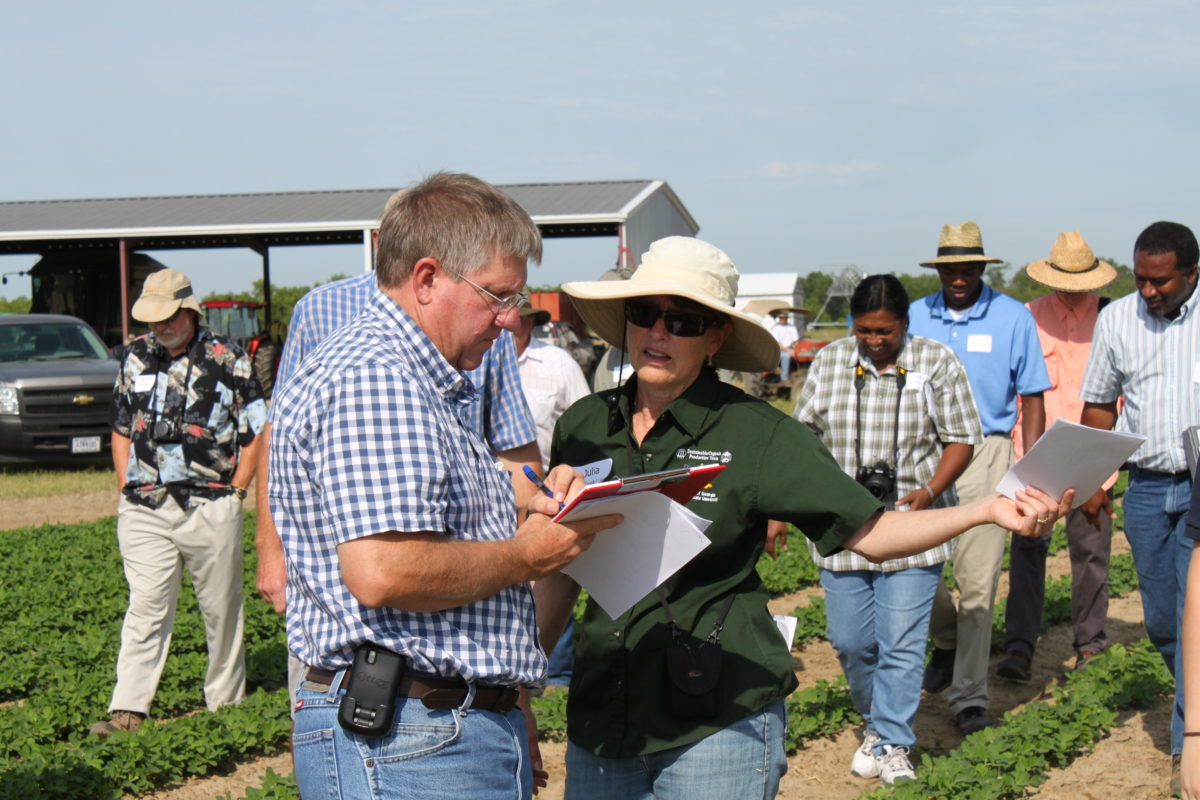
SARE's Professional Development Program (PDP) provides training, grants and resources for ag professionals to build their awareness, knowledge and skills related to sustainable agriculture concepts. PDP opportunities are intended for a wide range of professionals, including:
  • Cooperative Extension Service
  • Natural Resources Conservation Service (NRCS)
  • Farm Service Agency (FSA)
  • the private sector
  • NGOs

The PDP program includes two key components: competitive grants awarded at the regional level for the development of training curricula, outreach efforts, communications projects and similar work; and a network of state coordinators, working part-time for SARE in each state and island protectorate, who hold workshops and field days to share sustainable practices and research results, provide travel scholarships for ag professionals to attend training events, and generally serve as sustainable agriculture resources in their state.

Professional Development grants

Grants are administered at the level of each SARE region. To learn more about PDP grant opportunities and the application process, click here.

Find your state coordinator

To find your state coordinator and the resources they have available, first select the appropriate region:

Northeast Region
North Central Region
Southern Region
Western Region


What is a PDP Project?

Adding livestock like sheep and goats to rangeland can help ranchers manage noxious weeds and reduce the fuel that can prompt out-of-control Western fires, two goals that were the focus of a SARE professional development project based in Washington. Project leader Don Nelson introduced new grazing concepts, from holistic management to multi-species grazing, to some 30 agricultural professionals and ranchers from Washington, Idaho, Oregon, and California.

His series of workshops resulted in at least five new range enterprises featuring diverse herds and flocks to control unwanted vegetation. “Most ‘noxious’ weeds are not the problem—they’re a symptom of how the land has been managed,” Nelson said. Cattle like to graze on grass, but sheep also dine on forbs and goats prefer woody “browse” material. “If you know these preferences, you can inventory a site and create a future landscape using them as tools,” he said.

Introducing new livestock species provides a lower cost, potentially more effective strategy than spraying herbicides, he said. Another benefit is the market potential, as goat meat is a staple of some segments of America’s culturally diverse population. After the training, one of the participants teamed up with a nearby rancher to introduce sheep and goats to reduce knapweed and potentially hazardous undergrowth on a property in Dallesport, Wash.

Other SARE projects have evolved from the professional development workshops, including grazing goats in a tree plantation to reduce unwanted “understory” vegetation in Clearwater County, Idaho; and introducing goats and sheep to slow the invasive Russian Olive tree on a West Richland, Wash., ranch.

Some of the goat producers with whom Nelson has worked have found new markets through California wholesalers. “There’s an untapped market potential,” Nelson said.

[For more information about this Western Region project, go to the SARE projects database and search for EW01-006.]

25th SARE logo USDA Logo

1122 Patapsco Building | University of Maryland | College Park, MD 20742-6715

This Web site is maintained by the national outreach office of the SARE program, supported by the National Institute of Food and Agriculture, U.S. Department of Agriculture.

North Central SARE | Northeast SARE | Southern SARE | Western SARE

Sustainable Agriculture Research & Education ©2012

  • Help |
  • RSS Feeds |
  • A Guide To This Site