• WebStore |
  • Advanced Search |
  • MySARE Login |
  • SARE Social Media |
  • Contact Us |
  • SANET Listserv |
  • Low Bandwidth |
Search MySARE Reports
  • Grants
    • Apply for a Grant
    • Funded Grants in Your State
  • Project Reports
    • Submit a Report
    • Search the Database
    • Project Search Tips
    • About Project Reports
    • About Search Results
    • Project Products
  • Learning Center
    • Books
    • Bulletins
    • Fact Sheets
    • Topic Rooms
    • From the Field
    • Newsletters
    • Multimedia
    • Courses and Curricula
    • Project Products
    • SARE Biennial Reports
    • SANET Listserv
    • SARE Program Materials
    • Conference Materials
    • WebStore
  • Professional Development
    • PDP Overview
    • Fellows & Search for Excellence Programs
    • Sample PDP Grant Projects
    • Educator Curriculum Guides
    • National Continuing Education Program
    • State Coordinator Contact Information
  • State Programs
    • State Coordinator Program Overview
    • State Coordinator Contact Information
    • State Program Webpages
    • Funded Grants in Your State
  • Events
    • Event Calendar
    • Past Conferences
  • Newsroom
    • Press Releases
    • SARE in the News
    • Media Contacts
    • Newsletters
    • Media Toolkit
    • A Guide To This Site
    • SARE and Social Media
  • About SARE
    • SARE's Four Regions
    • Join Our Mailing List
    • SARE Grants
    • Learning Center
    • Professional Development
    • SARE Outreach
    • Historical Timeline
    • Staff
    • Vision & Mission
    • What is Sustainable Agriculture?
  • Home»
  • Learning Center»
  • Multimedia»
  • Videos from the Field»
  • The Ogallala Aquifer of the Texas High Plains: A Race Against Time
facebook
Twitter
YouTube
- + Font Size
Print
Share
  • by Type
  • by Topic
  • Books
  • Bulletins
  • Fact Sheets
  • Topic Rooms
  • From the Field
  • Newsletters
  • Multimedia
  • Courses and Curricula
  • Project Products
  • SARE Biennial Reports
  • SANET Listserv
  • SARE Program Materials
  • Conference Materials
  • WebStore
  • Animal Production
  • Community Development
  • Cover Crops
  • Crop Production
  • Economic/Marketing
  • Education & Training
  • Energy Conservation & Renewable Energy
  • For Consumers
  • Integrated Systems
  • Natural Resources/Environment
  • Pest Management
  • Quality of Life
  • Season Extension
  • Soil Management
  • Specialty Crops
  • Value Added
  • WebStore

Multimedia

The Ogallala Aquifer of the Texas High Plains: A Race Against Time

The Texas Alliance for Water Conservation

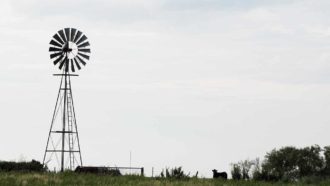
As the drought in the Texas High Plains continues to intensify, a unique partnership of producers and researchers is working diligently to find economically viable alternatives to the region’s irrigation-dependent crop monocultures. The single source of irrigation water for the region is the massive, underground aquifer known as the Ogallala, one of the largest fresh-water aquifers in the world. It was formed millions of years ago from the erosion of the Rocky Mountains and now traverses through portions of eight states—Colorado, Kansas, Nebraska, New Mexico, Oklahoma, South Dakota, Texas and Wyoming—providing 30 percent of the United States’ irrigation, and contributing to an astounding 20 percent of the country’s entire agricultural output.

In the West Texas High Plains, an area that receives only 18 inches of rainfall annually in an average year, the Ogallala is a crucial, but finite resource. Even before the recent drought, it was clear that the area’s increasing number of irrigation wells, and a lack of adequate recharge, was bringing High Plains agriculture to a crisis point. 

This short documentary is about a committed and cutting-edge research team at Texas Tech University that is using a collaborative systems approach to explore innovative agricultural alternatives that use less water. Initial funding for the long-term project and team—called the Texas Coalition for Sustainable Integrated Systems Research (TeCSIS)—was provided 15 years ago by the Southern Sustainable Agriculture Research and Education (SARE) program. This initial grant has since been leveraged into a $6.2 million grant from the state of Texas, which led to the creation of a coalition of producers and researchers called the Texas Alliance for Water Conservation (TAWC). Together, TAWC and TeCSIS are evaluating a number of alternative crop and livestock systems, looking at such factors as total water use, water-use efficiency, productivity of crops and livestock, and economic profitability.

Watch the video to learn how researchers and producers are using creative and collaborative methods to develop new opportunities for agriculture in the Texas’ arid plains.

A supplement to the video, Agricultural Systems to Reduce Water Use in the Texas High Plains, is also available:

Ogallala.pdf 39.86 kB

Want more information? See the related SARE grant(s) LS97-082, Sustainable Crop/Livestock Systems in the Texas High Plains, LS02-131, Forage and Livestock Systems for Sustainable High Plains Agriculture, LS08-202, Crop-livestock Systems for Sustainable High Plains Agriculture, and MS09-001, Building a Sustainable Future for Agriculture.


How to Order

Only available online


Dig Deeper - Water Conservation

Download a supplement to this video, Agricultural Systems to Reduce Water Use in the Texas High Plains:

Ogallala.pdf 39.86 kB

Check out these additional resources on water conservation and the systems approach:

  • Integrated Systems for the West Texas High Plains (presentation by Vivien Allen at SARE's 20th Anniversary Conference, 2008)
  • Smart Water Use on Your Farm or Ranch
  • Perspectives on Systems Research (video series)
 

Related Resources

You may be interested in more information about: Integrated Systems.

Search the MySARE project reports database for research about Integrated Systems.

Sare 25 Years

1122 Patapsco Building | University of Maryland | College Park, MD 20742-6715

This Web site is maintained by the national outreach office of the SARE program, supported by the National Institute of Food and Agriculture, U.S. Department of Agriculture.

North Central SARE | Northeast SARE | Southern SARE |  Western SARE

Sustainable Agriculture Research & Education ©2012

  • Help |
  • RSS Feeds |
  • A Guide To This Site