• WebStore |
  • Advanced Search |
  • MySARE Login |
  • SARE Social Media |
  • Contact Us |
  • SANET Listserv |
  • Low Bandwidth |
Search MySARE Reports
  • Grants
    • Apply for a Grant
    • Funded Grants in Your State
  • Project Reports
    • Submit a Report
    • Search the Database
    • Project Search Tips
    • About Project Reports
    • About Search Results
    • Project Products
  • Learning Center
    • Books
    • Bulletins
    • Fact Sheets
    • Topic Rooms
    • From the Field
    • Newsletters
    • Multimedia
    • Courses and Curricula
    • Project Products
    • SARE Biennial Reports
    • SANET Listserv
    • SARE Program Materials
    • Conference Materials
    • WebStore
  • Professional Development
    • PDP Overview
    • Fellows & Search for Excellence Programs
    • Sample PDP Grant Projects
    • Educator Curriculum Guides
    • National Continuing Education Program
    • State Coordinator Contact Information
  • State Programs
    • State Coordinator Program Overview
    • State Coordinator Contact Information
    • Funded Grants in Your State
  • Events
    • Event Calendar
    • Past Conferences
  • Newsroom
    • Press Releases
    • SARE in the News
    • Media Contacts
    • Newsletters
    • Media Toolkit
    • A Guide To This Site
    • SARE and Social Media
  • About SARE
    • SARE's Four Regions
    • SARE Grants
    • Learning Center
    • Professional Development
    • SARE Outreach
    • Historical Timeline
    • Staff
    • Vision & Mission
    • Join Our Mailing List
    • What is Sustainable Agriculture?
  • Home»
  • Learning Center»
  • From the Field»
  • Southern SARE From the Field»
  • Helping Appalachian Farmers Tap New Markets
facebook
Twitter
YouTube
- + Font Size
Print
Share
  • by Type
  • by Topic
  • Books
  • Bulletins
  • Fact Sheets
  • Topic Rooms
  • From the Field
    • View all From the Field
    • North Central SARE From the Field
    • Northeast SARE From the Field
    • Southern SARE From the Field
    • Western SARE From the Field
  • Newsletters
  • Multimedia
  • Courses and Curricula
  • Project Products
  • SARE Biennial Reports
  • SANET Listserv
  • SARE Program Materials
  • Conference Materials
  • WebStore
  • Animal Production
  • Community Development
  • Cover Crops
  • Crop Production
  • Economic/Marketing
  • Education & Training
  • Energy Conservation & Renewable Energy
  • For Consumers
  • Integrated Systems
  • Natural Resources/Environment
  • Pest Management
  • Quality of Life
  • Season Extension
  • Soil Management
  • Specialty Crops
  • Value Added
  • WebStore

Southern SARE From the Field Profile

Helping Appalachian Farmers Tap New Markets

09-10 Highlights_05

Gary and Cindy Laws’ journey to successful organic farming started in the tobacco fields of western Virginia’s hill country. Both raised on tobacco farms, they saw the crop’s pitfalls firsthand: a declining market, health risks associated with smoking and, most importantly to the Laws, the myriad chemicals used in tobacco production.

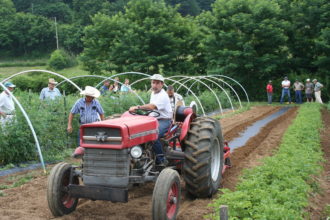
But, like hundreds of other farmers in Appalachia interested in tapping the organic market, the Laws family needed help learning new methods. That is where Appalachian Sustainable Development (ASD) came in, an innovative rural development nonprofit that helps about 100 former tobacco growers and others make a living off sustainably grown food.

Now, the Laws family sells produce grown on four acres to local and regional grocery stores under the Appalachian Harvest label, an ASD organic marketing program that receives SARE support.

Don Kiser, another Appalachian Harvest grower, added $6,000 to his family’s income in 2008 by growing organic bell peppers on a quarter acre. Along with technical help, fellow program members shared equipment with him, keeping his costs low.

“That was something very refreshing about ASD—they recognize that if you don’t at least make a little money on it, you can’t keep it up,” says Kiser.

This is one of ASD’s key premises: Families in the economically depressed region of western Virginia and eastern Tennessee must have an alternative to tobacco production that benefits not only the environment but also profits. So they turned to certified organics, an industry worth $1.7 billion in 2007, according to the USDA.

Appalachian Harvest, one of ASD’s two signature “field to table” programs, removes two major barriers for growers who want to sell organic produce locally—the lack of value-adding infrastructure and access to local markets, says ASD Executive Director Anthony Flaccavento.

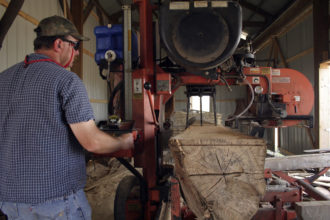
Along with technical assistance, Appalachian Harvest handles every aspect of marketing, from processing and transportation to contracting with area supermarkets, to public outreach. ASD’s other “field to table” program, Sustainable Woods, involves buying trees from landowners who practice ecological forest management and processing the wood into high-end furniture that is sold regionally. ASD owns a sawmill, and through
09-10 Highlights_23

Sustainable Woods pays loggers 20-30 percent more for their trees than other processers would.

ASD has received two SARE grants over the years: one in 1999 to recruit interested growers and conduct an educational campaign laying the foundation for a local organics market; and another in 2008 to expand Appalachian Harvest.

Appalachian Harvest now supplies produce to seven regional and national grocery chains that represent a combined 600 stores. Last year’s sales totaled more than $500,000. With lots of unmet demand remaining, the program continues to grow.

“Our whole effort is predicated on the idea that if we can get regular people to recognize the value of locally grown produce and pay a little more for it, it’ll create a market pull for farmers to make the transition,” Flaccavento says.

Want more information? See the related SARE grant(s) LS97-084, Regionally Centered Sustainable Agriculture System, and CS06-047, Value-added Sustainable Agriculture Initiative.


How to Order

Only available online

25th SARE logo USDA Logo

1122 Patapsco Building | University of Maryland | College Park, MD 20742-6715

This Web site is maintained by the national outreach office of the SARE program, supported by the National Institute of Food and Agriculture, U.S. Department of Agriculture.

North Central SARE | Northeast SARE | Southern SARE | Western SARE

Sustainable Agriculture Research & Education ©2012

  • Help |
  • RSS Feeds |
  • A Guide To This Site