Polyculture of paddlefish with channel catfish is a system designed for producing yearly harvest of paddlefish for meat. Paddlefish should be stocked large enough so as not to be preyed on by the catfish. In production ponds, more than 12 inches is the recommended size. In catfish fingerling ponds, less than 12 inches is suitable.
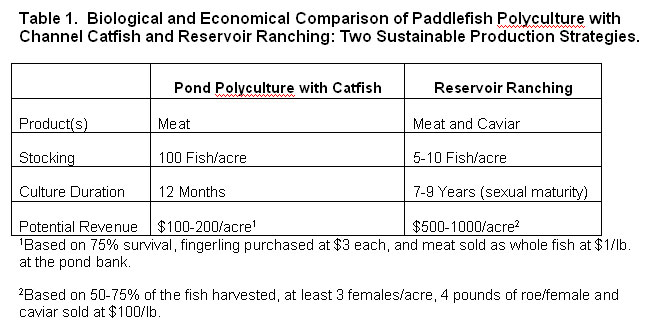
Since paddlefish feed on natural zooplankton, there is a certain carrying capacity of fish that can be grown per surface area of the pond based on the amount of natural food present. Ponds that are more than five years old typically have an established food base favorable to paddlefish; newer ponds should be assessed before stocking. For example, in Kentucky, we had an average fish survival of 29 percent in ponds that were only two years old as opposed to 75 percent in ponds that were six years or older. Paddlefish stocked at 100 fish/surface acre should exhibit a growth rate of about 0.5 pounds/month producing 5- to 6-pound fish in a year with about a 75-percent survival rate.
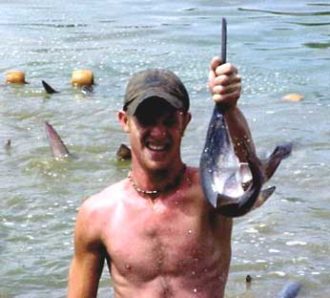
Paddlefish can be harvested using the same net or seine as catfish. Seines are typically large enough to encircle the entire area of the pond. In the middle of the seine, there is an attachment known as the sock, which is 10 to 15 feet long and allows the fish to congregate. Socks are of different mesh sizes to permit the grading of fish, allowing small fish to be released back into the pond and larger fish to be harvested and processed. During this grading process, paddlefish can be easily removed by hand sorting. The fish are relatively docile, and the paddle provides a convenient handle to catch the fish. In catfish fingerling ponds, using a seine with one-inch mesh will permit the release of small catfish and only retain the paddlefish. Paddlefish can be held in holding nets in the pond then loaded onto hauling truck for transport to the processing plant.
Catfish ponds are not recommended for growing mature female paddlefish for roe. Catfish ponds present a higher level of risk for caviar production than reservoir ranching due to possible mortality from frequent handling of the paddlefish during catfish harvest or low dissolved oxygen (<2 ppm). However, some producers have taken the risk and have been successful in producing caviar and meat by careful water quality management and infrequent harvests. Farmers who have raised paddlefish for several years in the same pond use gill nets to selectively remove only the paddlefish. Gill nets of four-inch mesh or larger will usually not catch catfish, and the paddlefish are easy to remove alive. This method is easy, but the gear may need special permitting by state officials for use as aquaculture harvesting equipment.
See table 1 (below) for a comparison of two production strategies for paddlefish.
Advantages and Disadvantages of Polyculturing Paddlefish with Channel Catfish
Paddlefish between 5 and 6 pounds grown with catfish in ponds should increase production yields by 300-500 pounds as well as profit margins between $100 to $200/acre compared to growing only catfish in ponds. Paddlefish are docile and relatively easy to harvest and sort from catfish. Farmers have reported better water quality such as lower ammonia and nitrite levels with paddlefish stocked in catfish ponds. Test markets have demonstrated a strong acceptance for paddlefish meat, which provides a new fish product for market diversification.
There are some disadvantages to using paddlefish in polyculture with catfish. Large numbers of stocker fingerlings (>12 inches) are currently not available. Because of the limited supply, prices of fingerlings are high (> $3). Paddlefish can not tolerate low dissolved oxygen (< 2 ppm). They are vulnerable to bird predation, especially at night, when the fish has a tendency to swim near the water surface. Markets are not well established because of lack of consistent supplies of cultured paddlefish.