• WebStore |
  • Advanced Search |
  • MySARE Login |
  • SARE Social Media |
  • Contact Us |
  • SANET Listserv |
  • Low Bandwidth |
Search MySARE Reports
  • Grants
    • Apply for a Grant
    • Funded Grants in Your State
  • Project Reports
    • Submit a Report
    • Search the Database
    • Project Search Tips
    • About Project Reports
    • About Search Results
    • Project Products
  • Learning Center
    • Books
    • Bulletins
    • Fact Sheets
    • Topic Rooms
    • From the Field
    • Newsletters
    • Multimedia
    • Courses and Curricula
    • Project Products
    • SARE Biennial Reports
    • SANET Listserv
    • SARE Program Materials
    • Conference Materials
    • WebStore
  • Professional Development
    • PDP Overview
    • Fellows & Search for Excellence Programs
    • Sample PDP Grant Projects
    • Educator Curriculum Guides
    • National Continuing Education Program
    • State Coordinator Contact Information
  • State Programs
    • State Coordinator Program Overview
    • State Coordinator Contact Information
    • Funded Grants in Your State
  • Events
    • Event Calendar
    • Past Conferences
  • Newsroom
    • Press Releases
    • SARE in the News
    • Media Contacts
    • Newsletters
    • Media Toolkit
    • A Guide To This Site
    • SARE and Social Media
  • About SARE
    • SARE's Four Regions
    • SARE Grants
    • Learning Center
    • Professional Development
    • SARE Outreach
    • Historical Timeline
    • Staff
    • Vision & Mission
    • Join Our Mailing List
    • What is Sustainable Agriculture?
  • Home»
  • Learning Center»
  • Fact Sheets»
  • A Sustainable Approach to Controlling Honey Bee Diseases and Varroa Mites»
  • Text Version»
  • Breeding for Hygienic Behavior
facebook
Twitter
YouTube
- + Font Size
Print
Share

Text Version

  • Breeding for Resistance
  • Testing Honey Bee Colonies for Hygienic Behavior
  • Breeding for Hygienic Behavior
  • Frequently Asked Questions
  • Research Synopsis
  • References
  • Printable Version

Can't find something? Ask or send feedback.

SARE's mission is to advance—to the whole of American agriculture—innovations that improve profitability, stewardship and quality of life by investing in groundbreaking research and education. SARE's vision is...

Breeding for Hygienic Behavior

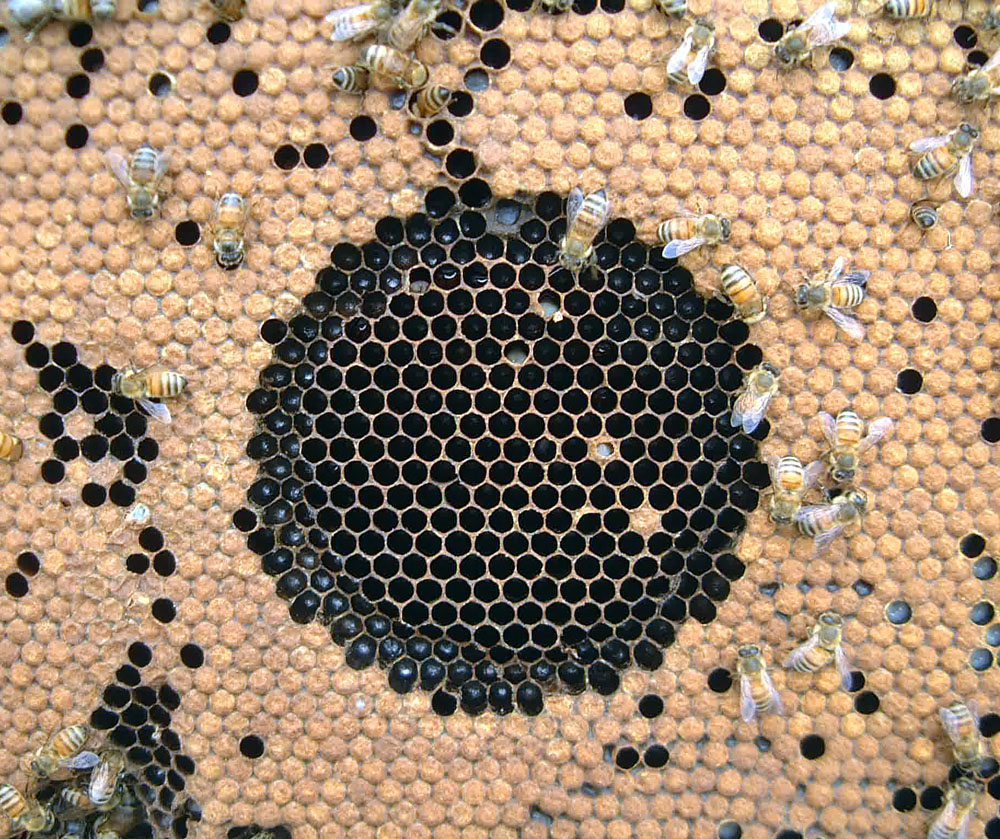
a hygienic colony
Photo E-1. An example of a hygienic colony that has uncapped and removed over 95 percent of the brood frozen with liquid N2 within 48 hours.
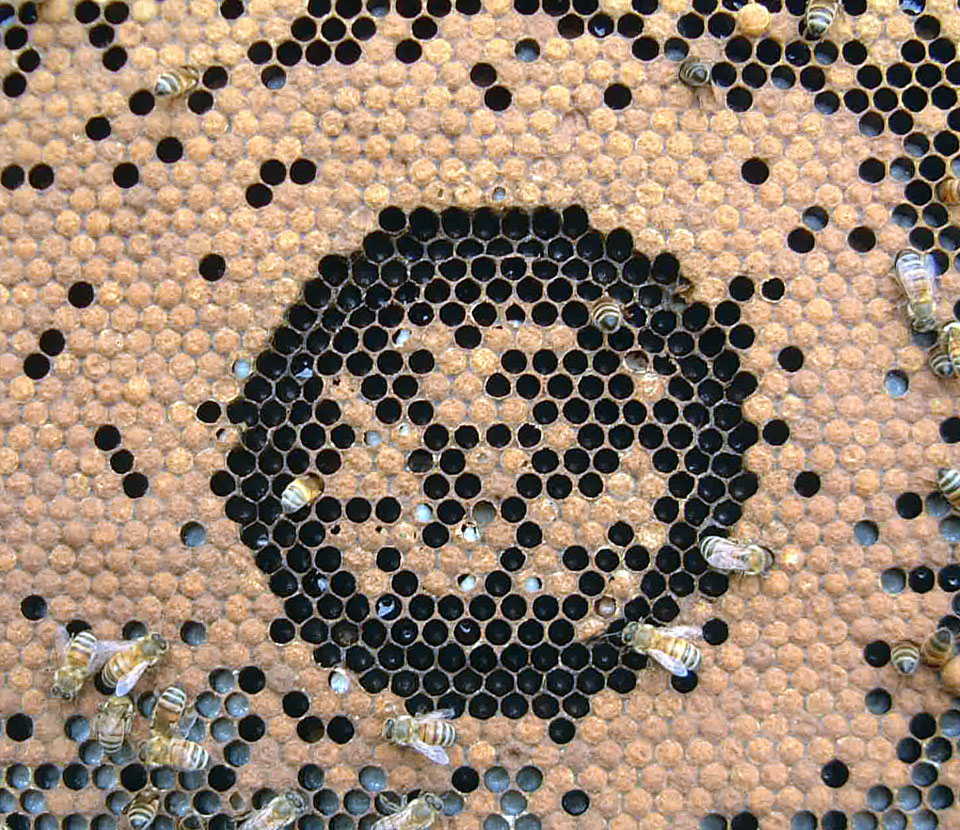
a non-hygienic colony
Photo E-2. An example of a non-hygienic colony that has uncapped and removed less than half of the frozen brood within 48 hours.

Breeding for Hygienic Behavior
Any race or line of bees can be bred for hygienic behavior. We recommend that beekeepers select for hygienic behavior from among their best breeder colonies; i.e., from those that have proven to produce honey, winter well, are gentle, and display all the characteristics desired by the breeder. A breeder can get a head start on selecting for hygienic behavior simply by rearing queens from colonies that do not have chalkbrood.
When colonies are first screened for hygienic behavior using a freeze-killed brood method, they may not remove all of the frozen brood within 48 hours. The colonies that remove the most freeze-killed brood within 48 hours should be propagated by rearing queens from them. Subsequent generations will remove the brood more quickly, because hygienic queens from the first generation will produce drones for the second generation. If the hygienic queens are instrumentally inseminated with semen collected from drones from hygienic colonies, or are mated naturally in an isolated area, where all the surrounding drones are from hygienic colonies, it will be easier to fix the trait in your line of bees. In time, if many bee breeders select for hygienic behavior, the frequency of the trait should increase in the general population of bees, which will increase the chances that any queen will encounter drones that carry the trait.

The effects of American foulbrood, chalkbrood and Varroa mites can be alleviated if queen producers select for hygienic behavior from their own lines of bees. The ability of a colony to remove freeze-killed brood is correlated with disease and mite resistance; however, the actual degree of resistance can only be evaluated in controlled tests when the colonies are challenged with American foulbrood, chalkbrood, or Varroa mites.

Our experience has shown there are no apparent negative characteristics that accompany the trait. Years of research experience have shown it would greatly benefit the beekeeping industry to have productive, hygienic queens mated with hygienic drones available commercially.


Next Section

You are reading the SARE fact sheet A Sustainable Approach to Controlling Honey Bee Diseases and Varroa Mites.

Order this publication.

25th SARE logo USDA Logo

1122 Patapsco Building | University of Maryland | College Park, MD 20742-6715

This Web site is maintained by the national outreach office of the SARE program, supported by the National Institute of Food and Agriculture, U.S. Department of Agriculture.

North Central SARE | Northeast SARE | Southern SARE | Western SARE

Sustainable Agriculture Research & Education ©2012

  • Help |
  • RSS Feeds |
  • A Guide To This Site