• WebStore |
  • Advanced Search |
  • MySARE Login |
  • SARE Social Media |
  • Contact Us |
  • SANET Listserv |
  • Low Bandwidth |
Search MySARE Reports
  • Grants
    • Apply for a Grant
    • Funded Grants in Your State
  • Project Reports
    • Submit a Report
    • Search the Database
    • Project Search Tips
    • About Project Reports
    • About Search Results
    • Project Products
  • Learning Center
    • Books
    • Bulletins
    • Fact Sheets
    • Topic Rooms
    • From the Field
    • Newsletters
    • Multimedia
    • Courses and Curricula
    • Project Products
    • SARE Biennial Reports
    • SANET Listserv
    • SARE Program Materials
    • Conference Materials
    • WebStore
  • Professional Development
    • PDP Overview
    • Fellows & Search for Excellence Programs
    • Sample PDP Grant Projects
    • Educator Curriculum Guides
    • National Continuing Education Program
    • State Coordinator Contact Information
  • State Programs
    • State Coordinator Program Overview
    • State Coordinator Contact Information
    • Funded Grants in Your State
  • Events
    • Event Calendar
    • Past Conferences
  • Newsroom
    • Press Releases
    • SARE in the News
    • Media Contacts
    • Newsletters
    • Media Toolkit
    • A Guide To This Site
    • SARE and Social Media
  • About SARE
    • SARE's Four Regions
    • SARE Grants
    • Learning Center
    • Professional Development
    • SARE Outreach
    • Historical Timeline
    • Staff
    • Vision & Mission
    • Join Our Mailing List
    • What is Sustainable Agriculture?
  • Home»
  • Learning Center»
  • Fact Sheets»
  • Polyculture and Reservoir Ranching»
  • Text Version
facebook
Twitter
YouTube
- + Font Size
Print
Share

Text Version

  • Paddlefish
  • Polyculture of Paddlefish and Catfish
  • Reservoir Ranching
  • Summary
  • Research Synopsis
  • References
  • Printable Version

Can't find something? Ask or send feedback.

SARE's mission is to advance—to the whole of American agriculture—innovations that improve profitability, stewardship and quality of life by investing in groundbreaking research and education. SARE's vision is...

Polyculture and Reservoir Ranching: Sustainable Aquaculture Strategies for Paddlefish (Polyodon spathula) Production

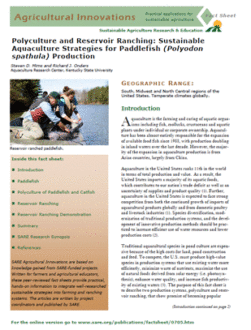
Reservoir ranched paddlefish.
Geographic Range: South, Midwest and North Central regions of the United States. Temperate climates globally.

Introduction
Aquaculture is the farming and caring of aquatic organisms including fish, mollusks, crustaceans and aquatic plants under individual or corporate ownership. Aquaculture has been almost entirely responsible for the expansion of available food fish since 1988, with production doubling in inland waters over the last decade. However, the majority of the expansion in aquaculture production is from Asian countries, largely China.

Aquaculture in the United States ranks 11th in the world in terms of total production and value. As a result, the United States imports a majority of its aquatic foods, which contributes to our nation's trade deficit as well as an uncertainty of supplies and product quality (1). Further, aquaculture in the United States is expected to face strong competition from both the continued growth of imports of aquacultural products globally and from domestic poultry and livestock industries (1). Species diversification, modernization of traditional production systems, and the development of innovative production methods should be practiced to increase efficient use of water resources and lower production costs (2).

Traditional aquacultural species in pond culture are expensive because of the high costs for land, pond construction and feed. To compete, the U.S. must produce high-value species in production systems that use existing water more efficiently, minimize waste of nutrients, maximize the use of natural foods derived from solar energy (i.e. photosynthesis), enhance water quality, and increase fish productivity of existing waters (3). The purpose of this fact sheet is to describe two production systems, polyculture and reservoir ranching, that show promise of becoming popular methods for increasing fish production and profits in inland waters compared to a traditional monoculture system. We also examine the usefulness of paddlefish as a high-value, emerging species that grows well in polyculture with channel catfish or in reservoir ranching.

See Full Article

Top

You are reading the SARE fact sheet Polyculture and Reservoir Ranching.

Order this publication.

25th SARE logo USDA Logo

1122 Patapsco Building | University of Maryland | College Park, MD 20742-6715

This Web site is maintained by the national outreach office of the SARE program, supported by the National Institute of Food and Agriculture, U.S. Department of Agriculture.

North Central SARE | Northeast SARE | Southern SARE | Western SARE

Sustainable Agriculture Research & Education ©2012

  • Help |
  • RSS Feeds |
  • A Guide To This Site